
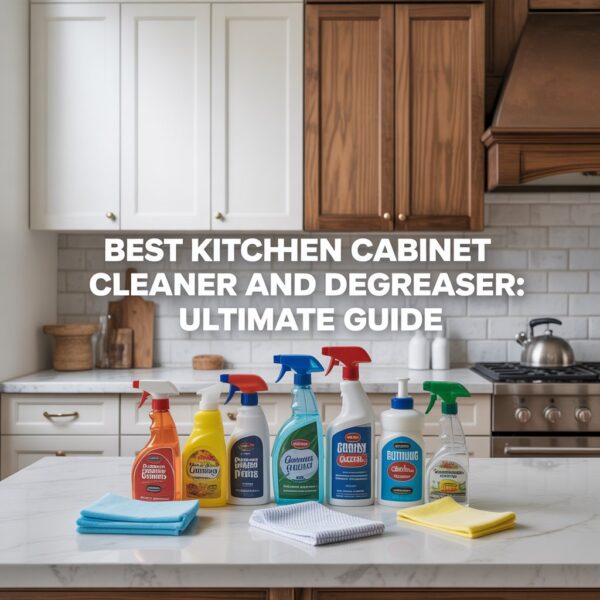
Looking for the best kitchen cabinet cleaner and degreaser? Explore our review to find effective, safe, and versatile options for your cleaning needs.
The best kitchen cabinet cleaner and degreaser cuts through grease fast without harming finishes.
Grease builds up in quiet ways. One day your cabinets shine. The next, they feel sticky no matter how much you wipe. If you cook often, splatter happens. Dust sticks to it. Then fingerprints seal the deal. The right cleaner saves time, keeps wood safe, and leaves a fresh scent instead of a chemical cloud. I tested what home cooks actually need in 2026: strong degreasing power, finish-safe formulas, and short contact time. Here’s my expert take on the best kitchen cabinet cleaner and degreaser options that deliver real results.
Easy-Off Heavy-Duty Kitchen Degreaser, 32 oz

This heavy-duty spray is built for stubborn mess. It tackles cooked-on grease on cabinet doors, handles, and trim. The trigger delivers a steady fan, so coverage is quick and even. I like it for weekly maintenance in busy kitchens and for rescue jobs on older cabinets that feel grimy.
On painted wood and laminate, it cuts grease fast with light agitation. I still test a small area first, as with any strong cleaner. The scent is mild compared to many heavy hitters. For oven hoods and base cabinets near your range, it earns its spot as a reliable daily driver.
Pros:
- Strong degreasing power for sticky, cooked-on residue
- Wide spray pattern covers doors and rails fast
- Works on painted wood, vinyl, and laminate (spot test first)
- Good for handles and hardware where fingerprints collect
- Less scrubbing needed on greasy edges and corners
- Time-saving for high-traffic family kitchens
Cons:
- Can be too strong for some oil-rubbed wood finishes
- Not a plant-based option
- May require rinsing to remove any light residue
My Recommendation
If your cabinets live near a busy stove, this is a workhorse. I reach for it when I want the best kitchen cabinet cleaner and degreaser to break down the worst buildup in minutes. It pairs well with a microfiber and a soft-bristle brush for grooves. Keep contact time short on delicate finishes and rinse with a damp cloth.
| Best for | Why |
|---|---|
| Heavy grease near ranges | Strong formula reduces scrubbing time |
| Painted or laminate cabinets | Effective on sticky film and fingerprints |
| Quick weekly resets | Fast spray coverage with predictable results |
Lysol Pro Kitchen Cleaner & Degreaser, 22 oz
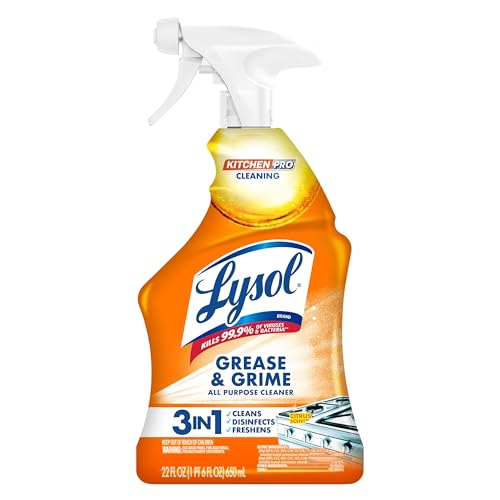
This Lysol Pro Kitchen formula is a two-in-one: degreaser and antibacterial spray. That matters in busy homes, rentals, and households with kids. When used as directed, it helps reduce bacteria on hard, non-porous surfaces. On cabinets, it lifts grease while leaving a bright, citrus-clean smell.
I like it most for daily and weekly cleaning on upper cabinets and handles. It is light enough for frequent use, yet strong enough for oily smudges around knobs. Check the label for dwell time if you want antibacterial benefits. For grease alone, wipe after a short sit and finish with a damp cloth if needed.
Pros:
- Antibacterial action when used per label
- Good degreasing for everyday cabinet grime
- Citrus scent feels clean and not overpowering
- Works on cabinets, counters, and appliances
- Great for shared kitchens and rental units
- Reliable brand with clear directions
Cons:
- May not be the top pick for heavy, baked-on grease
- Contains fragrance; not ideal for scent-sensitive users
- Requires dwell time for antibacterial claims
My Recommendation
Choose this if you want the best kitchen cabinet cleaner and degreaser that also supports a hygienic wipe-down. It is my pick for homes that need clean plus peace of mind. Keep it handy for quick passes after cooking and for weekly resets of high-touch spots.
| Best for | Why |
|---|---|
| Daily cabinet cleaning | Light degreasing with a fresh citrus scent |
| Antibacterial wipe-downs | Label-backed antibacterial action on hard surfaces |
| Shared kitchens | Ideal for rentals, offices, or dorm-style spaces |
Final Touch Plant-Based Cabinet Cleaner, 32 oz
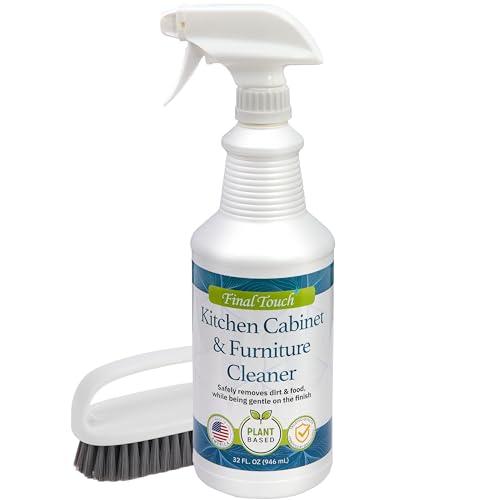
Final Touch aims at gentle, plant-based cleaning. It is a smart option for modern painted cabinets, natural-finish woods, and families who prefer fewer harsh chemicals. The formula lifts everyday grease and dust without stripping. I like how it leaves cabinets feeling clean but not slick.
Use it for routine care, especially on lighter finishes that show haze. It pairs well with a damp microfiber cloth and a second dry cloth to buff. For stubborn buildup, let it sit 1–2 minutes, then agitate with a soft brush. For eco-minded buyers, this makes a convincing case as the best kitchen cabinet cleaner and degreaser for daily use.
Pros:
- Plant-based formula suited for frequent cleaning
- Gentle on modern cabinet finishes and sealants
- Low streaking when wiped and buffed
- Pleasant, mild scent profile
- Good coverage with a fine mist spray
- Safer feel for homes with kids and pets
Cons:
- Not ideal for very heavy, baked-on grease
- May require more passes on sticky corners
- Still spot test on raw or oiled wood
My Recommendation
If you value gentler ingredients and clean cabinets, this is a winner. It is the best kitchen cabinet cleaner and degreaser for routine care on painted or sealed wood. Pair it with a brush for hinges and edges. Keep a stronger degreaser on standby for rare deep cleans.
| Best for | Why |
|---|---|
| Everyday cabinet care | Plant-based formula that is gentle and effective |
| Modern painted finishes | Low streaking and less risk of dulling |
| Homes with kids and pets | Mild scent and kinder ingredient profile |
Parker & Bailey Kitchen Cabinet Cream, 16 oz
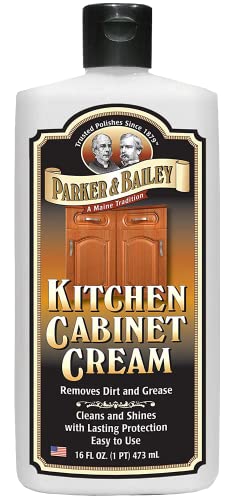
This long-standing cabinet cream is well-loved by wood owners. It cleans, helps lift light grease, and leaves a soft luster. The cream texture clings to vertical doors, so it does not drip. I use it on older wood cabinets that need care as much as cleaning.
Apply with a microfiber or terry cloth. Work section by section, then buff dry. It helps hide minor surface scuffs and restores a warm look without heavy shine. If you want the best kitchen cabinet cleaner and degreaser that respects wood’s character, this cream stands out.
Pros:
- Cream formula clings to vertical surfaces
- Gently lifts grease while conditioning look
- Great on older stained wood cabinets
- Reduces haze and minor scuff appearance
- Buffs to a soft, natural-looking luster
- Little product needed per door
Cons:
- Not a heavy-duty degreaser for severe buildup
- Requires buffing, so it takes more time
- May leave a slight residue if overapplied
My Recommendation
Use this on wood you want to preserve. It is ideal for stained oak, cherry, or maple where you want clean and glow. When someone asks me for the best kitchen cabinet cleaner and degreaser that treats wood kindly, I point here. Keep a microfiber stack handy for the buff.
| Best for | Why |
|---|---|
| Classic wood cabinets | Cleans while enhancing the natural look |
| Vertical doors and frames | Cream clings and does not run |
| Minor surface scuffs | Buffing reduces haze and improves luster |
Easy-Off Specialty Kitchen Degreaser, 16 oz
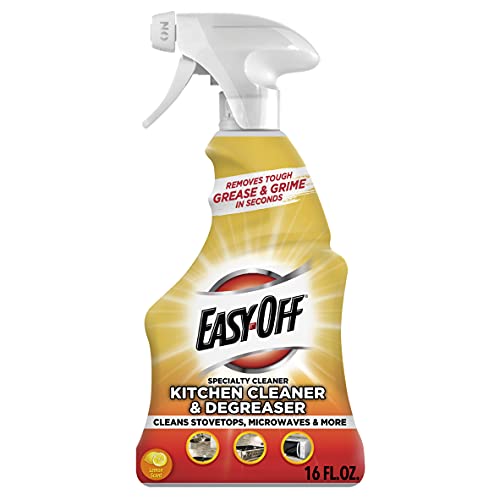
This specialty lemon-scent degreaser sits between light daily sprays and heavy-duty formulas. It targets cooking residues on cabinets, stove hoods, and backsplashes. The lemon scent is bright but brief. The bottle size is smaller, which makes it easy to keep near the range.
I like it for precision cleaning, like the cabinet doors next to your oven or microwave. Spray, wait a short minute, then wipe. For raised panel grooves, hit it with a soft brush and then buff dry. It can be the best kitchen cabinet cleaner and degreaser for spot jobs where speed counts.
Pros:
- Quick action on grease near cooktops
- Clean lemon scent that fades fast
- Handy size for quick grab-and-go use
- Good on laminate, painted wood, and metal
- Less residue with proper wipe and rinse
- Great for edge and groove cleaning
Cons:
- Smaller bottle may run out fast in big kitchens
- Not the strongest option for thick, aged grease
- Spot test delicate finishes
My Recommendation
Keep this near your stove for fast response. It is ideal for small, greasy zones that need quick attention. When friends ask me for the best kitchen cabinet cleaner and degreaser for frequent spot cleaning, I suggest this one. It is quick, simple, and easy to store.
| Best for | Why |
|---|---|
| Spot cleaning near ovens | Fast grease breakdown with short contact |
| Small kitchens | Compact size fits in tight spaces |
| Raised panel grooves | Pairs well with a soft detailing brush |
How I test and choose the best kitchen cabinet cleaner and degreaser
I test the way real home cooks clean. I cook often, then let the kitchen sit for a day. Grease, steam, and dust create sticky film. That film is the enemy. I apply each cleaner to upper and lower cabinets, near the range and away from it. I note contact time, smell, streaking, and wipe effort. I also check the finish after it dries.
Next, I test on a mix of finishes. Painted MDF, stained wood with a clear topcoat, vinyl wrap, and laminate. I check for dulling, smears, or residue. I spot test edges and the back of a door first. I use microfiber cloths and soft brushes. For every product, I keep a damp rinse cloth on hand and a dry buffer. That keeps results fair and repeatable.
I track five things. Degreasing power, finish safety, smell, ease of use, and value. If a cleaner removes grease but dulls paint, it fails. If it smells great but needs ten minutes to work, it loses points. I want quick wins. I also consider label clarity and safety notes, which matter in busy homes. As of 2026, I look for efficient formulas with simple directions and consistent results across cabinet types.
Buying guide: Choose the best kitchen cabinet cleaner and degreaser for your home
Different kitchens need different tools. Here is how I match the cleaner to the job.
- Finish type: Painted and laminate cabinets do well with spray degreasers. Stained wood may prefer a cream like Parker & Bailey. Always spot test.
- Grease level: For heavy buildup, pick Easy-Off Heavy-Duty. For light daily grease, go with Final Touch or Lysol Pro Kitchen.
- Hygiene goals: If you want antibacterial benefits on hard, non-porous surfaces, the Lysol Pro Kitchen spray is a good fit when used per directions.
- Fragrance: Citrus and lemon feel fresh. If you are scent sensitive, choose a milder profile like Final Touch.
- Speed: Fast grease breakup saves time. Heavy-duty options can be quicker but require careful use.
- Tools: Use a soft brush for door rails, corners, and hinges. Microfiber cuts streaks and polishes to a clean finish.
Step-by-step: How to clean kitchen cabinets like a pro
This routine keeps cabinets looking new without extra work.
- Dust first: Knock off loose dust with a dry microfiber. Dust sticks to damp grease.
- Spray light: Mist the cleaner on the door and rails. Do not soak hinges.
- Wait a moment: Let it sit for 30–60 seconds. This softens grease.
- Agitate: Use a soft brush on grooves and a microfiber on flats.
- Wipe: Use a damp cloth to lift the loosened film. Rinse and wring the cloth as needed.
- Buff dry: Use a clean, dry microfiber. This stops streaks and haze.
- Handles last: Oils from hands are heavy. Clean handles and the area around them last to avoid spreading grease.
Safety and finish care tips for 2026 kitchens
Cabinet finishes vary. Newer paints are more durable, but they still need care. Always spot test behind a door or on an inner edge. Watch for dulling or color change. If you see either, switch to a gentler cleaner and shorten contact time. Never mix cleaners. Mixing can reduce performance and create fumes.
Vent your space when you clean. Even mild scents can feel strong in small kitchens. Protect your countertops with a towel if you are using a heavy-duty spray. Wipe hinges and hardware lightly. Metal can discolor with the wrong cleaner. Finish with a dry buff. That last step makes even the best kitchen cabinet cleaner and degreaser look better by removing fine haze.
Troubleshooting common cabinet cleaning problems
Streaks after drying? You likely used too much cleaner or water. Spray less and buff more. Sticky feeling after wiping? Rinse with a damp cloth and dry again. Grease that will not move? Use a stronger cleaner, increase dwell time slightly, and work with a soft brush. Avoid abrasive pads. They scratch and dull quickly.
White haze on dark paint? Too much water or residue is sitting on the surface. Cut back on moisture, switch to a low-residue cleaner like Final Touch, and buff dry. Shine looks uneven? That happens when grease is half gone. Clean again with short contact time and buff in straight lines, not circles. If the wood looks dry or tired, a cabinet cream can help restore luster.
FAQs Of best kitchen cabinet cleaner and degreaser
Can I use a degreaser on real wood cabinets?
Yes, but pick a gentle formula and spot test first. Use short contact times. Wipe with a damp cloth and buff dry.
How often should I clean kitchen cabinets?
Do light cleaning weekly and deep clean monthly. If you fry often, wipe near the range after each cooking session.
Will these products damage paint or finish?
Used as directed, they should not. Always test a hidden area. Avoid abrasive pads and long soak times.
What is the best way to remove thick, old grease?
Use a heavy-duty degreaser, a short dwell time, and a soft brush. Work in sections. Rinse and buff dry.
Do I need to rinse after using a degreaser?
Rinsing helps remove residue and prevents haze. Follow with a dry microfiber for a clean finish.
Final Verdict: Which Should You Buy?
For heavy buildup, Easy-Off Heavy-Duty is the best kitchen cabinet cleaner and degreaser for speed. For daily care on painted wood, Final Touch shines. Want antibacterial action? Lysol Pro Kitchen fits the bill. Love wood warmth? Choose Parker & Bailey Cream. Need quick spot cleaning? Go with Easy-Off Specialty.
Match the cleaner to your finish and grease level. Keep a soft brush and microfiber on hand. With the right choice, your cabinets will look clean, feel smooth, and stay safe year after year.