
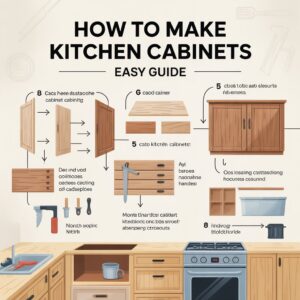
Creating your own kitchen cabinets can save money and give your kitchen a personal touch. This guide will walk you through every step, from planning to finishing, so even beginners can make cabinets with confidence.
Introduction to Making Kitchen Cabinets
Kitchen cabinets are the heart of your kitchen storage solutions. Making your own cabinets allows you to choose the style, size, and finish you want. You can design custom cabinets that fit your kitchen perfectly. With the right tools and simple steps, anyone can make cabinets that look professional.
Step 1: Planning Your Kitchen Storage Solutions
Good planning is the first step to successful cabinet building. It helps you avoid mistakes and ensures your cabinets fit well in your kitchen space.
Determining Cabinet Sizes and Layout
Measure your kitchen carefully. Note the height, width, and depth for each cabinet. Base cabinets are usually 34–36 inches high and 24 inches deep. Wall cabinets are shorter but should match your design.
Sketch a layout on paper or use free online tools. Decide where you need drawers, shelves, or special storage for pots, pans, and other kitchen items.
Choosing Cabinet Door Styles
Cabinet doors define the look of your kitchen. Popular styles include:
Shaker doors: Simple, clean lines, very modern.
Raised panel doors: Traditional, decorative style.
Flat panel doors: Minimalist and easy to paint.
Pros and Cons of Each Style
Shaker: Easy to make, fits most kitchens.
Raised panel: Elegant, needs more skill.
Flat panel: Modern look, quick to build.
Choosing the right style depends on your skill level and kitchen design.
Step 2: Tools for Building Cabinets
Having the correct tools is crucial. Using proper tools makes your work faster and safer.
Essential Tools List
Circular saw or table saw
Drill and screwdriver
Clamps
Measuring tape and square
Hammer and nail set
Wood glue
Safety Equipment
Always wear safety glasses, gloves, and a dust mask. Cabinets require cutting and sanding wood, which can be dangerous without protection.
Step 3: Choosing Materials for Your Cabinets
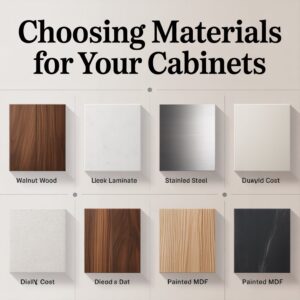
Materials affect the look, durability, and cost of your cabinets.
Selecting Wood Types
Plywood: Strong, easy to cut, affordable.
Oak: Hard, durable, classic appearance.
Maple: Smooth finish, modern style.
How to Make Oak Kitchen Cabinets Look Modern
Modern oak cabinets can be painted white or gray, or stained lightly. Smooth edges and minimal hardware give them a contemporary look. You can also add glass panels for a fresh design.
Step 4: Building Kitchen Base Cabinets
Base cabinets hold most of your kitchen storage. Building them correctly ensures stability.
Cutting and Assembling the Base
Cut plywood pieces for the bottom, sides, back, and shelves. Assemble with wood glue and screws. Make sure corners are square using a square tool.
Adding Supports and Toe Kicks
Add internal supports for strength. Toe kicks are small recesses at the bottom of base cabinets. They make standing at the counter more comfortable and improve cabinet stability.
Step 5: How to Make Kitchen Cabinet Doors
Cabinet doors are a central part of your kitchen design.
Measuring and Cutting Door Panels
Measure cabinet openings carefully. Cut wood panels for doors using a saw. Sand edges to make smooth.
Assembly Techniques for Cabinet Doors
For shaker or raised panel doors, assemble frame pieces first. Glue and nail corners. Then attach panels. Ensure doors fit perfectly to avoid gaps.
Step 6: Making Kitchen Cabinet Drawers
Drawers are important for storing utensils, pans, and tools.
Designing Drawer Boxes
Measure inside width and depth of cabinets. Cut drawer sides, bottom, and back panels. Assemble with wood glue and screws.
Installation of Drawer Slides
Choose slides that match drawer size. Install slides inside the cabinet, then attach drawers. Test sliding action to ensure smooth movement.
Step 7: Cabinet Finishing Techniques
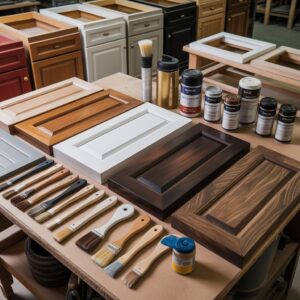
Finishing gives your cabinets a professional and durable look.
Sanding and Staining
Sand all wood surfaces smooth with fine-grit sandpaper. Apply stain to highlight the natural wood grain. Use a brush or cloth, then wipe off extra.
Painting Options for a Modern Look
For a modern style, use light colors like white, gray, or pastel shades. Apply primer first, then two thin coats of paint. Sand lightly between coats for a smooth finish.
Step 8: Installing Your Custom Cabinets
Proper installation is key for a stable and long-lasting kitchen.
Securing Base and Wall Cabinets
Start with base cabinets. Level each unit before securing to the wall. Use screws into studs for strong support. Then install wall cabinets, checking level and alignment.
Adding Hardware and Final Touches
Attach handles or knobs. Adjust doors and drawers for smooth operation. Add finishing touches like trim, molding, or decorative panels to complete the look.
Conclusion and Final Thoughts
Making your own kitchen cabinets is rewarding. With careful planning, the right tools, and patience, you can build cabinets that fit your kitchen perfectly. Custom cabinets allow you to choose wood, style, and finish. You also gain skills that can help in future projects.
Whether you want a modern or classic kitchen, these steps provide a clear blueprint. Start with small cabinets if you are new, then move to larger projects as your confidence grows. The result is a beautiful, functional kitchen made by your own hands.
FAQs for How to Make Kitchen Cabinets
1. Can beginners make kitchen cabinets at home?
Yes. Start with simple designs like shaker or flat panel cabinets. Follow step-by-step instructions and use proper tools.
2. Which wood is best for DIY kitchen cabinets?
Plywood is popular for beginners. Oak and maple are durable and look good for modern or traditional kitchens.
3. How can I make my oak cabinets look modern?
Paint them light colors, use minimal hardware, and smooth the edges. Glass panels or simple handles also help.
4. Do I need special tools to make cabinets?
Basic tools like a saw, drill, clamps, and measuring tape are enough. Safety gear is also important.
5. How long does it take to build kitchen cabinets?
For beginners, small projects can take a few days. Large kitchens may take 1–2 weeks depending on design and experience.