
Rust-Oleum Universal and Stone Coat topcoats lead for durability and clarity.
I know the frustration of freshly painted kitchen cabinets losing their crisp look after a week. Paint scuffs, food splatters, steam, and daily wear can dull or yellow a finish. The right clear coat locks in color, adds toughness, and keeps cabinets looking new. I’ve tested multiple clear coats on real kitchen cabinets and painted samples. In this guide I explain the best clear coat for kitchen cabinets, show pros and cons, and tell you which product suits different needs.
Rust-Oleum Universal High Gloss Topcoat

I often reach for Rust-Oleum Universal High Gloss when I need a fast, durable spray finish for cabinet trims and accents. The aerosol sprays smooth out quickly and deliver a bright, clear coat over painted surfaces. For light to moderate kitchen use the gloss helps wipe away spills easily.
Application is simple. Shake well. Keep the can 8–12 inches from the surface. I always test a small area first to confirm adhesion and sheen. The spray dries fast and minimizes brush marks on trim and moulding.
Pros:
- Fast-drying aerosol for quick projects and touch-ups
- High gloss finish resists stains and wipes clean easily
- Works on multiple surfaces—wood, laminate, metal—good for trim
- Easy to apply without brushes or rollers
- Affordable and widely available at retail and online
- Leaves a smooth, reflective surface that hides small flaws
- Good clarity that enhances painted colors
- Low-odor formulas available in some variants
Cons:
- Gloss can highlight brush marks or surface imperfections
- Aerosol coverage is limited for full cabinet sets—multiple cans needed
- Not as hard as some water-based polyurethanes for heavy use floors
My Recommendation
This Rust-Oleum Universal High Gloss spray is best for quick touch-ups and accents where I want a bright sheen and easy cleanup. If you paint cabinet doors and want a crisp, reflective finish, this is a great tool in my kit. It pairs well with enamel and oil-based paints and gives good resistance to smudges and splashes.
For many DIYers looking for the best clear coat for kitchen cabinets, this product is a solid pick for trims and exposed edges. It’s not my pick for high-traffic cabinet faces that see frequent scraping from pans and utensils, but it’s excellent for keeping painted trim looking new.
| Best for | Why |
|---|---|
| Quick touch-ups | Aerosol spray dries fast and covers small areas cleanly |
| Accent trim | High gloss highlights details and wipes clean |
| Multi-surface use | Adheres to wood, laminate, and metal trims |
Rust-Oleum Chalked Matte Clear Topcoat
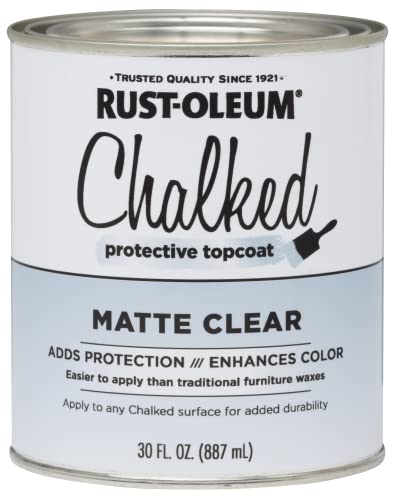
I choose Rust-Oleum Chalked Matte Clear Topcoat when I want a soft, chalky finish that feels modern and lived-in. This water-based topcoat preserves a matte appearance and protects chalk-style paints from cleaning and light wear. It’s a favorite for open-shelf kitchens where a low sheen is stylistically preferred.
The formula blends into chalk paints and reduces the risk of patchiness. It dries to a flat finish and resists mild spills. I like that it reduces reflective glare, which helps hide fingerprints on frequently used cabinet doors.
Pros:
- Matte finish hides imperfections and fingerprints
- Water-based and low odor—good for indoor use
- Specifically formulated for chalk-style paints and milk paints
- Easy to apply with a brush or roller for a smooth look
- Dries fairly fast and allows light recoating
- Works well on painted furniture and cabinets for a vintage look
- Compatible with decorative finishes and small repairs
Cons:
- Not as durable as higher-build polyurethanes in heavy-use kitchens
- May require several coats to reach desired protection
- Matte finish may darken slightly when applied thin
My Recommendation
If you painted cabinets with chalk or milk paint I often recommend this Rust-Oleum Chalked Matte Clear Topcoat. I use it when homeowners want a soft, low-gloss look and reasonably good protection against light wear. It keeps the patina while stopping surface dirt and mild scuffs.
For many who want a stylish, muted cabinet finish, this is one of the best clear coat for kitchen cabinets that balances look and function. I advise using two coats and testing in a discreet area first. It’s ideal for kitchen islands, open shelving, and cabinet interiors that need charm without shine.
| Best for | Why |
|---|---|
| Matte cabinet finishes | Preserves low sheen and hides fingerprints |
| Chalk-painted surfaces | Formulated to protect chalk-style paints |
| Low-odor indoor work | Water-based and safe for indoor use |
Dixie Belle Gator Hide Polyacrylic Topcoat
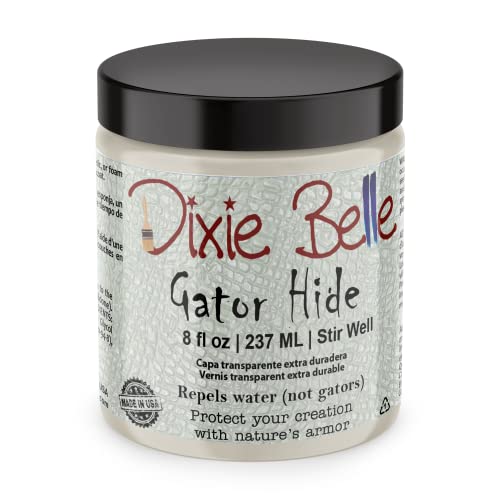
Dixie Belle Gator Hide is my go-to when I need a non-yellowing, clear polyacrylic that protects painted cabinets. It’s formulated to resist UV and moisture. I’ve used it over lighter paints and seen minimal ambering over time, which matters in bright kitchens.
The product levels out nicely and is user-friendly for both brushes and sprayers. For cabinet faces and drawer fronts I prefer the thinner feel of polyacrylic because it doesn’t bubble easily and maintains a natural surface feel.
Pros:
- Non-yellowing formulation maintains color integrity
- Good water resistance for kitchen environments
- Levels out for a smooth finish with minimal streaks
- Available in different sheen levels for design flexibility
- Low VOC and safer for indoor application
- Compatible with many paints and previous finishes
- Resists UV which helps prevent fading near windows
- Works well on both painted and raw wood surfaces
Cons:
- Can be softer than some hard polyurethanes under heavy abrasion
- May need multiple coats for kitchens with high grease exposure
- Brush marks can show if applied with a worn brush
My Recommendation
I recommend Dixie Belle Gator Hide to homeowners who want a clear coat that preserves paint color and resists yellowing. I often pick it as the best clear coat for kitchen cabinets that face sun exposure or those painted in white and pale tones. It’s a practical choice for cabinets where color fidelity matters most.
Apply two thin coats and allow full cure before heavy use. For kitchens that see moderate daily use this topcoat balances clarity and protection. I find it offers great value and long-term color stability for painted cabinetry.
| Best for | Why |
|---|---|
| White or light cabinets | Non-yellowing formula keeps tones true |
| Sunlit kitchens | UV resistance reduces fading and discoloration |
| Painted cabinet fronts | Polyacrylic finish stays clear and smooth |
Stone Coat Semi-Gloss Cabinet Top Coat
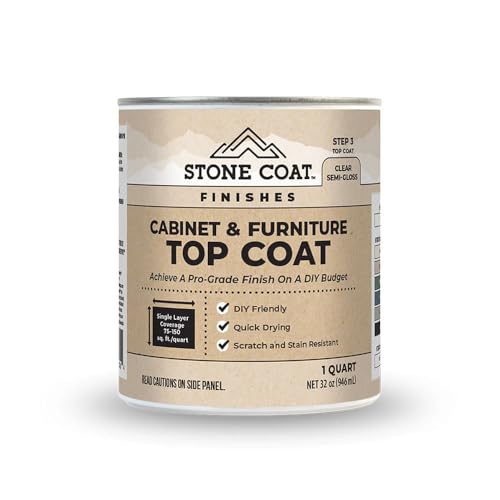
Stone Coat’s Cabinet and Furniture Top Coat is a water-based polyurethane-acrylic designed specifically for cabinets and furniture. I use it when I need a hard, scratch-resistant surface that still looks natural. It sands well between coats and levels smoothly for a professional finish.
The semi-gloss sheen is ideal for kitchens because it cleans easily and keeps surfaces bright without a mirror shine. In my experience, this product holds up well to daily wear and frequent cleaning, making it a top contender for long-term durability.
Pros:
- Durable polyurethane-acrylic blend resists scratches and stains
- Semi-gloss sheen balances shine and ease of cleaning
- Low VOC and water-based for safer indoor use
- Fast drying and easy sanding between coats for a smooth result
- Clear film that keeps paint color vivid without ambering
- Good coverage per quart for cabinet sets when applied thinly
- Fast cure times reduce wait before reinstalling doors
- Suitable for painted and raw wood cabinets
Cons:
- Semi-gloss can reveal surface imperfections if prep is poor
- Requires careful application to avoid brush strokes or laps
- Higher cost per quart than basic hobby polycrylics
My Recommendation
Stone Coat Semi-Gloss is my top pick when I need a durable, long-lasting finish and I often call it the best clear coat for kitchen cabinets for full kitchens. I choose it for cabinet doors, drawer fronts, and frames that need a tough skin against daily wear. It pairs well with modern and traditional kitchens and holds up to routine cleaning and cooking splatter.
If you want longevity and a professional look, this product gives great value despite a slightly higher price. Apply two to three thin coats with light sanding between coats for the best result. For kitchens that demand durability, it’s the clear coat I reach for first.
| Best for | Why |
|---|---|
| Full kitchen cabinets | Durable finish handles daily use well |
| High-traffic homes | Scratch and stain resistance prolongs life |
| Professional results | Sands and levels for a near-factory finish |
How I Test and Choose the Best Clear Coat for Kitchen Cabinets
I test clear coats on actual cabinet doors, drawer fronts, and paint samples. I evaluate adhesion, clarity, yellowing, scratch resistance, and cleanability. I check how a finish handles grease, steam, and abrasive cleaning. I also time cure and note how many coats are needed for good protection.
Durability is the priority for kitchen cabinets. I look for products that offer a hard film without feeling plastic under the hand. I favor water-based polyurethanes or polyurethane-acrylic blends for everyday kitchens because they balance toughness and clarity. Polyacrylics are excellent for color fidelity and non-yellowing protection, which is crucial for white or pastel cabinets.
Application matters as much as chemistry. I prefer products that level well and sand between coats. They should not trap bubbles or show brush marks easily. For large jobs, a product that works through a spray system or HVLP sprayer saves time and delivers the smoothest finish. Pay attention to recoat windows and full cure times—these impact how soon you can use the kitchen without damage.
Cost and availability factor into my recommendations too. A top-performing product that’s prohibitively expensive for a full kitchen won’t be practical for most homeowners. I aim to strike a balance between performance, ease of use, and price. The best clear coat for kitchen cabinets is the one that fits your finish level, traffic demands, and budget.
Application Tips to Get the Best Results
Prep is 70% of the job. I always clean cabinets with a degreaser and scuff sand between paint and topcoat. Remove hardware and label doors so reinstallation is straightforward. I use tack cloths to remove dust before coating.
Thin coats beat one thick coat. I apply two to three thin coats with light sanding between coats. This builds a hard shell while minimizing runs and brush marks. For spray application, I maintain consistent distance and overlapping passes.
Allow full cure before heavy use. Even when a finish feels dry, full chemical cure can take days to weeks. I wait at least 48–72 hours before light use, and up to a week for heavy use items. Follow manufacturer cure recommendations for the best long-term results.
Test in a discreet area. I always try the clear coat over the paint and in the intended sheen. This checks adhesion, color shift, and appearance. It avoids surprises and helps me choose the right number of coats.
FAQs Of best clear coat for kitchen cabinets
Which clear coat type is best for kitchen cabinets: polyurethane, polyacrylic, or lacquer?
I recommend water-based polyurethane-acrylic blends for most kitchens. They offer strong abrasion resistance and low yellowing. Polyacrylics are best for preserving light paint tones. Lacquers dry fast but can require professional spray equipment.
How many coats of clear coat should I apply to cabinets?
I typically apply two to three thin coats. Sand lightly between coats with 220–320 grit. More coats add protection, but thin, well-cured layers perform better than one very thick coat.
Will a clear coat yellow over time?
Some oil-based polyurethanes yellow with age. To avoid yellowing on whites, pick a non-yellowing polyacrylic or water-based polyurethane. I test on a sample to check for long-term color stability.
Can I use spray topcoats for entire cabinet sets?
You can, but aerosol cans often make large jobs costly. For full cabinets I use a spray gun or HVLP with a professional topcoat. Aerosols are great for touch-ups and small runs.
How do I clean cabinets after applying a clear coat?
Wait for full cure. Then clean with mild soap and water or a pH-neutral cleaner. Avoid abrasive pads that may scratch the finish. For stubborn grease, a gentle degreaser works well.
Final Verdict: Which Should You Buy?
Choosing the best clear coat for kitchen cabinets depends on your priorities. For durability and a long-lasting finish, Stone Coat Semi-Gloss is my top full-kitchen pick. For preserving light paint tones, Dixie Belle Gator Hide offers non-yellowing protection.
If you need quick touch-ups or a bright sheen, Rust-Oleum Universal spray is handy. Rust-Oleum Chalked matte works best for a soft, modern look on chalk-painted cabinets. Pick the product that matches your finish preference and traffic level.