
Use a degreasing solution, gentle scrub, rinse, and dry to remove grease from cabinets.
I have cleaned dozens of kitchens and coached homeowners on how to clean greasy kitchen cabinets safely and effectively. This guide draws on hands-on experience, cleaning science, and practical tips to help you remove grease without harming finishes. Read on to learn step-by-step methods, safe products, prevention tactics, and troubleshooting for every cabinet type.
Why kitchen cabinets get greasy
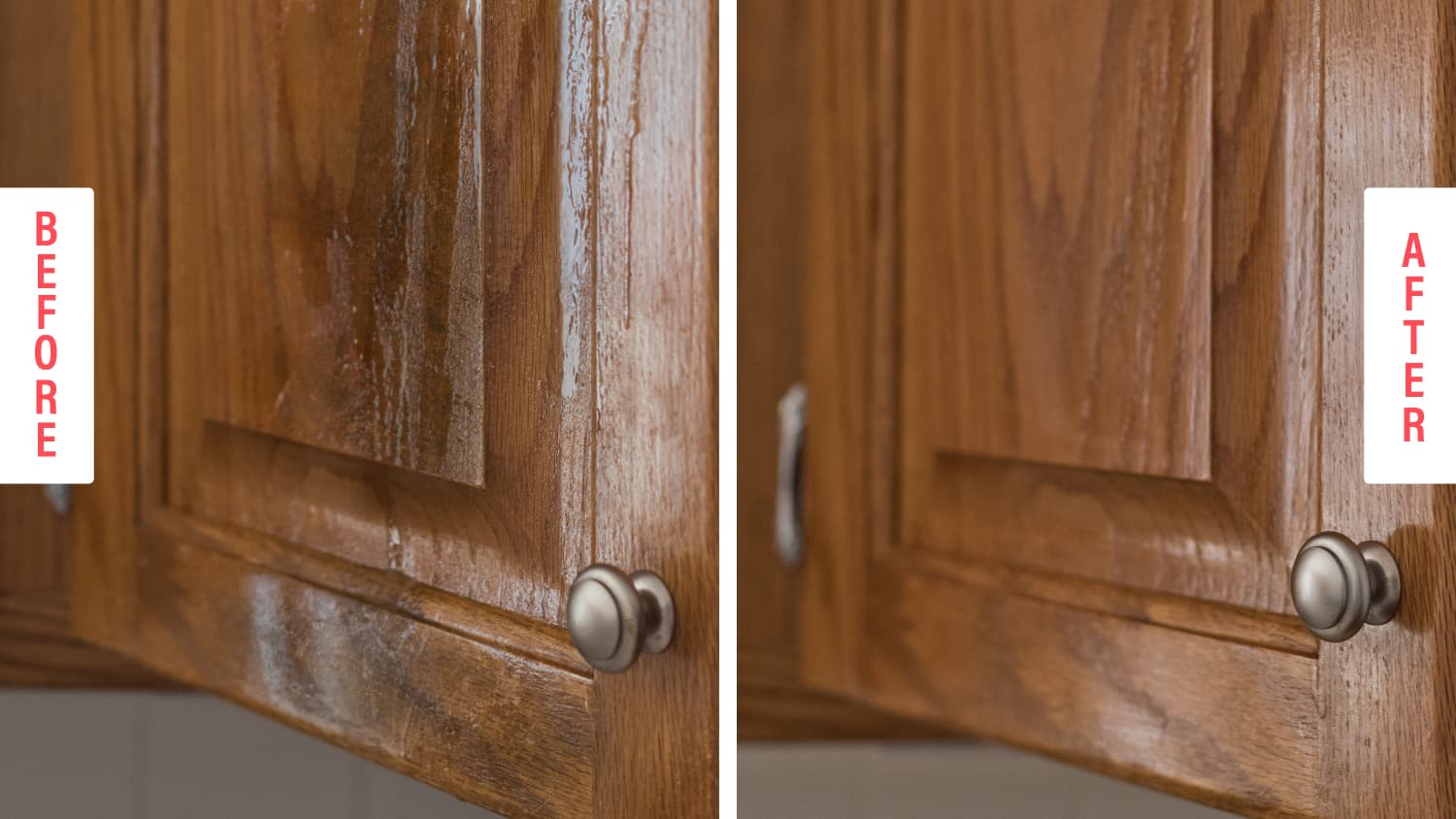
Grease lands on cabinets from cooking splatter, steam, and airborne oils. Over time, oils collect dust and harden into sticky films. Knowing this helps when you learn how to clean greasy kitchen cabinets with the right tools and timing.
What you’ll need to clean greasy kitchen cabinets
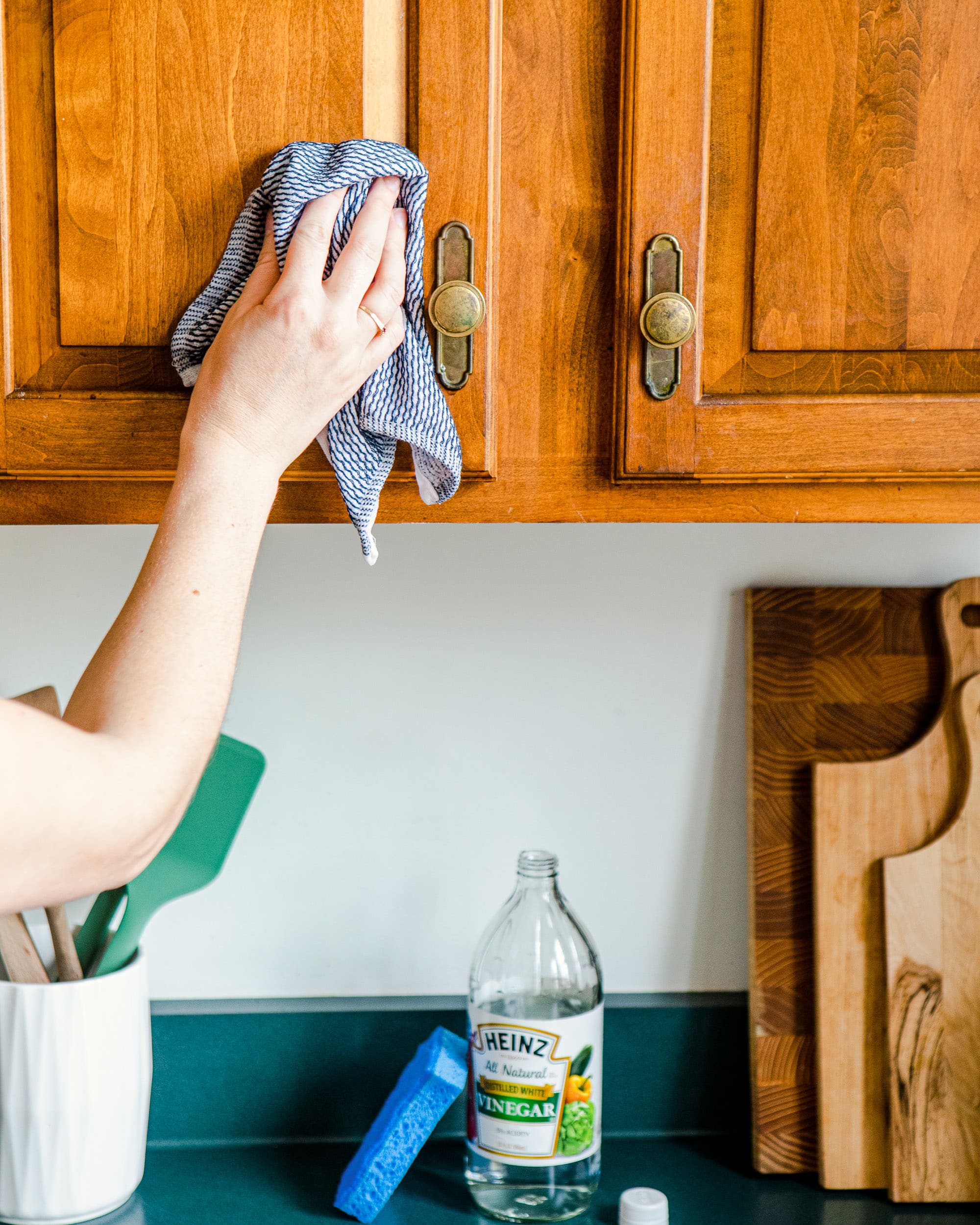
Use simple, safe tools and cleaners. Common items work best when paired with the right method.
- Bucket with warm water to mix cleaners and rinse cloths.
- Soft microfiber cloths to wipe without scratching.
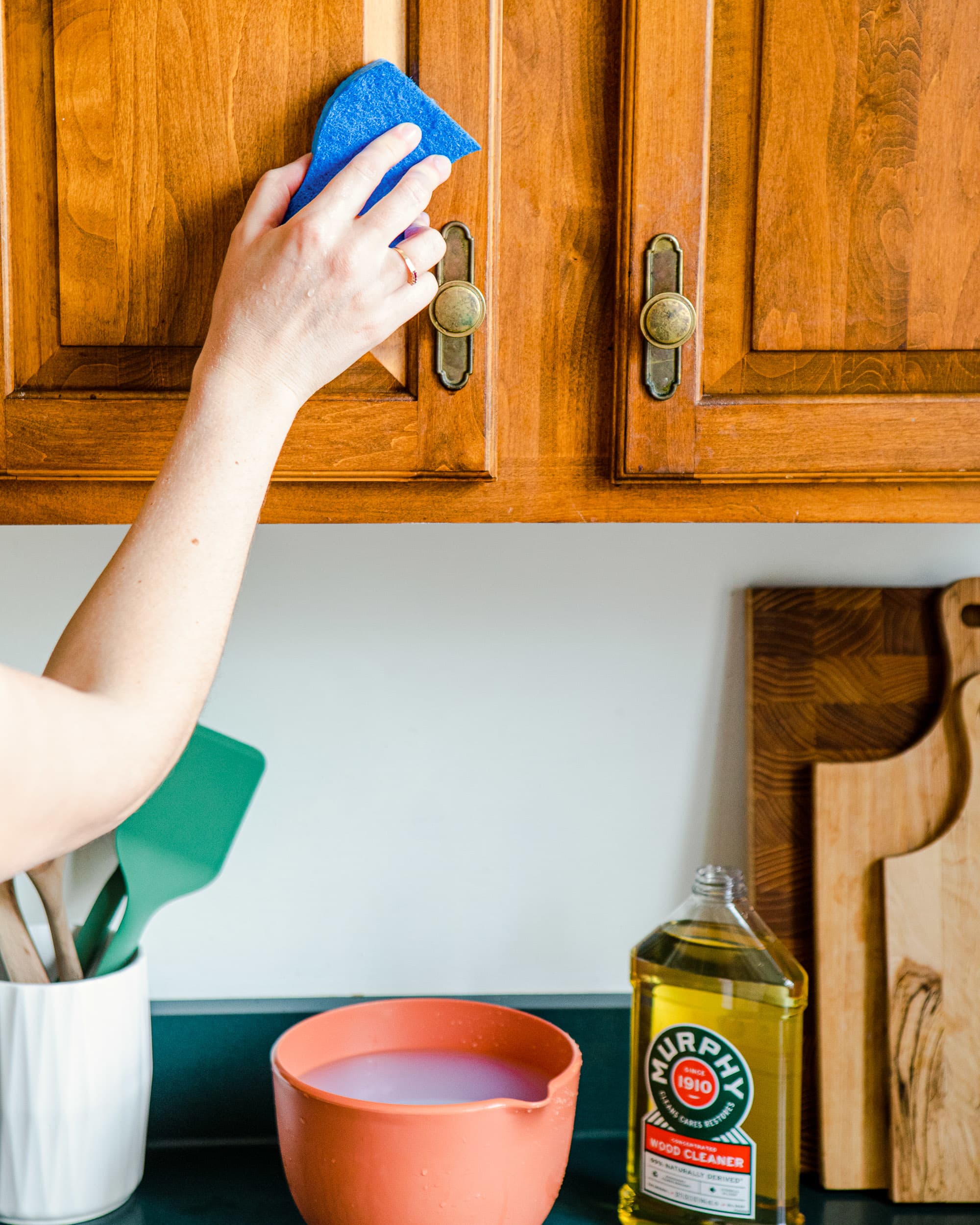
- Non-abrasive sponge for gentle scrubbing.
- Dish soap with degreasing power for mild grease.
- White vinegar to cut light grease safely.
- Baking soda for gentle abrasion on stubborn spots.
- Commercial degreaser for heavy grease or baked-on films.
- Old toothbrush or soft brush for crevices and hardware.
- Rubber gloves to protect skin from cleaners.
- Small tarp or towels to protect counters during deep cleaning.
Using the right kit makes how to clean greasy kitchen cabinets faster and safer.

Step-by-step: How to clean greasy kitchen cabinets (safe for most surfaces)
Follow these steps for most cabinet surfaces. Test cleaners in a hidden spot first.
- Clear and protect the area.
- Remove items from cabinet fronts. Lay towels under the work area.
- Dust or dry-wipe first.
- Remove loose dust with a dry microfiber cloth. This prevents smearing grease around.
- Mix a mild cleaning solution.
- Combine 1 tablespoon dish soap with 2 cups warm water. Dish soap targets oils well.
- Wipe from top to bottom.
- Wet cloth in the solution, wring well, and wipe panels. Work in small sections.
- Rinse with clear water.
- Use a second cloth dampened with clean water to remove soap residue.
- Dry immediately.
- Dry each section with a clean microfiber cloth to prevent streaks and water damage.
- Spot-treat stubborn grease.
- For sticky spots, sprinkle baking soda on a damp cloth and rub gently. Rinse and dry.
- Polish hardware.
- Clean handles and knobs with the same mild solution or a vinegar mix if needed.
- Reassemble and inspect.
- Put items back and check for missed spots.
These steps explain how to clean greasy kitchen cabinets without damaging finishes.
Tips by cabinet type
- Painted cabinets: Use mild soap only. Avoid strong solvents to prevent paint removal. Do a patch test.
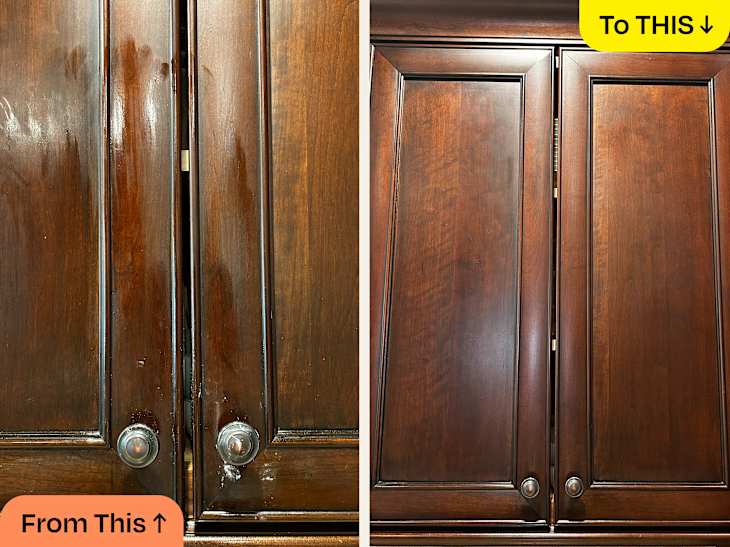
- Wood cabinets: Use minimal water. Wipe with a lightly damp cloth and dry quickly. Apply a small amount of wood polish if finish looks dull.
- Laminate and thermofoil: Use dish soap or a vinegar solution. Avoid high heat or aggressive scrubbing that can lift edges.

Tough grease and deep cleaning methods
When grease is thick or baked on, stronger methods help. Choose the gentlest effective option first.
- Baking soda paste: Mix baking soda with water to form a paste. Apply, wait 10 minutes, then wipe with a damp cloth. Rinse and dry.
- Vinegar spray: Mix equal parts white vinegar and water. Spray, wait a few minutes, then wipe. Vinegar cuts oil but may dull some finishes if overused.
- Commercial degreasers: Use a product labeled safe for your finish. Follow instructions and ventilate the room. Rinse thoroughly after use.
- Steam cleaners: Steam can loosen grease but may damage some finishes or veneers. Test a hidden area first and avoid steam on unsealed wood.
When you know how to clean greasy kitchen cabinets deeply, you save time and protect surfaces.

Preventing grease buildup
Prevention reduces deep cleaning frequency and keeps cabinets fresh.
- Wipe splatters promptly to stop grease from setting.
- Use a range hood or fan every time you cook.
- Install a splatter screen for frying and high-oil cooking.
- Wipe cabinet faces weekly with a damp microfiber cloth and mild soap.
- Seal gaps and caulk joints to reduce grease accumulation in seams.
These steps make ongoing care easier and extend the time between major cleanings.
Common mistakes to avoid when cleaning greasy kitchen cabinets
Avoid actions that cause damage or spread grease.
- Using abrasive pads that scratch finishes.
- Applying straight bleach or undiluted vinegar on wood.
- Letting water sit on wood or painted cabinets.
- Skipping a rinse after degreasing, which leaves residue.
- Scrubbing with too much force and stripping finishes.
Learning these pitfalls helps when deciding how to clean greasy kitchen cabinets safely.
Maintenance schedule and quick daily routine
A short routine keeps cabinets looking clean and prevents hard-to-remove buildup.
- Daily: Wipe visible splatters after cooking with a damp microfiber cloth.
- Weekly: Clean cabinet faces with mild soap solution and dry.
- Monthly: Inspect hardware and edges for grease. Clean crevices with a toothbrush.
- Quarterly: Do a deeper clean using baking soda paste or a commercial degreaser if needed.
Consistent care simplifies how to clean greasy kitchen cabinets over time.
Troubleshooting: stains, sticky residue, and damaged finishes
If residue remains or finishes get harmed, handle the issue carefully.
- Persistent sticky film: Repeat mild cleaning and use a baking soda paste. Avoid harsh solvents.
- Discolored or dulled finish: Stop cleaning with acidic agents. Use a finish-safe polish or consult a pro.
- Peeling veneer or bubbling paint: Moisture or heat may be to blame. Repair by consulting a finish specialist.
- Hardware corrosion: Replace or clean with a metal-appropriate cleaner, and dry well.
These fixes help you recover from common problems when you learn how to clean greasy kitchen cabinets correctly.
Frequently Asked Questions of how to clean greasy kitchen cabinets
What is the safest cleaner for painted cabinets?
A mild solution of dish soap and warm water is safest for painted cabinets. Test in a hidden area first and wipe with minimal moisture.
Can I use vinegar on wood cabinets?
Use vinegar sparingly on wood and always dilute it with water. Rinse and dry quickly to avoid dulling the finish.
How often should I deep clean greasy cabinets?
Deep clean every 3 to 6 months, or sooner after heavy cooking sessions. Light weekly wiping prevents heavy buildup.
Will baking soda scratch cabinet finishes?
Baking soda is mildly abrasive but safe when used gently. Make a paste and test in an inconspicuous spot before full use.
Are commercial degreasers safe for all cabinets?
Not always; some degreasers contain solvents that harm finishes. Choose products labeled safe for your cabinet material and follow directions.
How do I remove grease from cabinet hardware?
Soak hardware in warm, soapy water, scrub with a soft brush, and dry thoroughly. For stubborn grime, use a metal-safe cleaner.
Can steam cleaning damage cabinets?
Steam can loosen grease but may delaminate veneers or harm finishes. Test a hidden area and use low steam settings if necessary.
What if grease keeps returning quickly?
Increase ventilation, wipe splatters immediately after cooking, and use a hood fan to reduce airborne oil. Regular quick wipes prevent buildup.
Conclusion
You can remove grease and protect cabinet finishes with the right tools, simple solutions, and steady routines. Start with mild soap and water, move to baking soda or diluted vinegar for tougher spots, and use commercial degreasers only when needed. Keep up with quick weekly wipes and improve ventilation to cut future grease. Try these steps this week, and leave a comment to share your results or ask for advice on a specific cabinet type.