
Clean wood cabinets gently: use mild soap, warm water, soft cloths, and always test first.
I have cleaned and refinished dozens of kitchens, and I will show you how to clean wood kitchen cabinets without damaging the finish. This guide combines practical experience, safe methods, and step-by-step directions so you can remove grease and grime while protecting your cabinet finish. Read on for tested tips, common mistakes to avoid, and a simple routine that keeps wood cabinets looking like new.
:max_bytes(150000):strip_icc()/SPR-how-to-clean-wood-cabinets-7964253-03-f3fe8f0b0c4f4d4abe94e018e4e87768.jpg)
Why the finish matters and how cleaning affects it
Wood cabinet finishes protect the wood and make cleaning easier. Many finishes are thin and can dull or strip if you use harsh chemicals or scrubbing pads. Knowing the finish type helps you choose the right cleaner and method.
Common finishes include:
- Natural oil or wax
- Lacquer or varnish
- Polyurethane or water-based topcoats
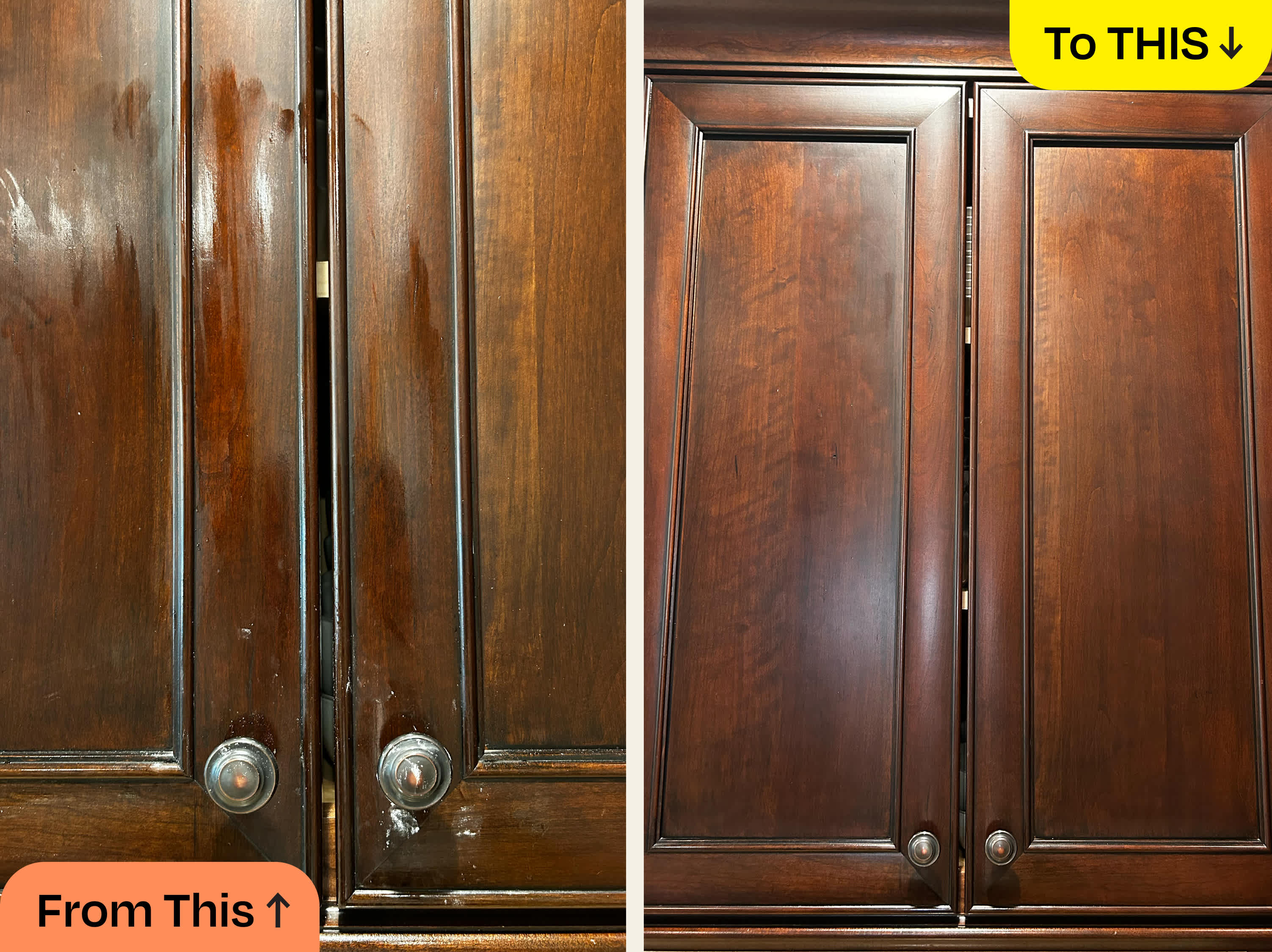
If you skip the right steps, you risk removing sheen, discoloring wood, or creating sticky residue. Learning how to clean wood kitchen cabinets without damaging the finish prevents costly repairs or refinishing later. I learned this the hard way after using an abrasive cleaner that left streaks on a newly refinished door.
:max_bytes(150000):strip_icc()/how-to-clean-wood-kitchen-cabinets-0123-2000-641e7e2dcbdc4518a80417c66e2e9194.jpg)
General cleaning principles to protect the finish
Follow a few simple rules every time you clean wood cabinets. These rules are the core of how to clean wood kitchen cabinets without damaging the finish.
Basic rules:
- Test in an inconspicuous spot before full cleaning.
- Use soft cloths, not abrasive pads.
- Work with a mild cleaner and dilute as recommended.
- Rinse well and dry completely to avoid water damage.
Keep hands and spills wiped quickly. The longer grease sits, the more aggressive cleaning must be, which raises risk to the finish. I now keep a small spray bottle with a gentle cleaner under the sink for quick touchups.

Step-by-step cleaning guide (safe, effective)
This step-by-step routine shows how to clean wood kitchen cabinets without damaging the finish. Follow each step in order.
- Clear surfaces and remove hardware
- Remove knobs and pulls if possible. Clean hardware separately in mild soap and water.
- Dust first
- Use a soft microfiber cloth or a vacuum with a brush attachment. Dusting prevents scratching.
- Make a mild cleaner
- Mix a few drops of dish soap in a quart of warm water. For extra grease, add a tablespoon of white vinegar.
- Spot test
- Apply cleaner to a hidden area. Wait one minute and check for finish change.
- Clean gently
- Dampen a soft cloth in the solution and wring thoroughly. Wipe along the wood grain with light pressure.
- Rinse and dry
- Wipe with a second cloth dampened with plain water, then dry immediately with a clean towel.
- Reattach hardware and buff
- Replace knobs and buff surfaces with a dry microfiber cloth to restore sheen.
Repeat this full clean every month or as needed. For daily care, use a dry cloth or very lightly dampened cloth to avoid build-up. This routine is my go-to when advising homeowners on how to clean wood kitchen cabinets without damaging the finish.
:max_bytes(150000):strip_icc()/GettyImages-626084744-7335af3828a547bd914f3a1db2351b85.jpg)
Deep cleaning and stain removal techniques
When cabinets have heavy grease, sticky residue, or dark stains, follow careful methods so you do not harm the finish. Deep cleaning should be more targeted, not harsher.
Safe deep cleaning options:
- Baking soda paste for stubborn spots — mix with water to a paste, apply briefly, then wipe away and rinse.
- Mineral spirits for polymerized grease — use sparingly on painted or sealed finishes and spot test first.
- Commercial wood cleaners labeled safe for finishes — follow directions and rinse well.
Avoid soaking wood in liquids. Use short, controlled applications and dry immediately. I once removed a ring of baked-on oil by applying a baking soda paste and gentle rubbing; the finish stayed intact because I rinsed and dried properly. Knowing how to clean wood kitchen cabinets without damaging the finish means choosing the least aggressive method that works.
Safe cleaners and products to use
Choose products designed for wood or mild household cleaners. These options reduce risk of finish damage while cleaning well.
Recommended types:
- Mild dish soap and warm water
- White vinegar diluted with water for grease (use sparingly)
- pH-neutral wood cleaners made for finished wood
- Mineral spirits for spot cleaning on sealed surfaces
Always dilute concentrated products. Read labels to confirm compatibility with your finish. When in doubt, test and wait. My toolbox always includes a diluted dish soap mix and a pH-neutral wood cleaner for regular maintenance of how to clean wood kitchen cabinets without damaging the finish.

Products and methods to avoid
Some popular cleaners and tools do real harm. Avoid these to keep your cabinets safe.
Avoid:
- Ammonia-based cleaners, bleaches, and abrasive powders
- Heavy-duty degreasers unless labeled safe for wood finishes
- Steel wool, scouring pads, or hard-bristle brushes
- Oil soaps on modern polyurethane finishes (they can leave residue)
- High-pressure steam cleaners which can lift finishing layers
Using these can dull, discolor, or strip the finish. I learned to stop using multi-surface degreasers on wood after one product removed the sheen from an oak cabinet face. When you know what to avoid, you can better follow safe steps for how to clean wood kitchen cabinets without damaging the finish.
Maintenance tips to protect the finish long-term
Small habits prevent deep cleans and preserve finishes. Make these part of everyday kitchen care.
Practical tips:
- Wipe spills immediately with a damp cloth.
- Use cabinet liners inside for greasy items.
- Clean handles frequently to reduce transfer of oils and dirt.
- Reapply a finish-restoring product yearly if recommended for your finish.
- Keep humidity stable to avoid wood swelling or cracking.
Routine care reduces need for aggressive cleaning. I advise clients to schedule a light clean every two weeks and a full gentle clean monthly. These steps make it easy to know how to clean wood kitchen cabinets without damaging the finish.
Frequently Asked Questions of how to clean wood kitchen cabinets without damaging the finish
What cleaner is safest for finished wood cabinets?
Use a mild dish soap diluted in warm water or a pH-neutral wood cleaner. Always test in a hidden spot before full use.
Can I use vinegar to clean wood cabinets?
Yes, diluted vinegar can cut grease but use sparingly and rinse well, as acid can dull some finishes over time.
How do I remove sticky residue without stripping the finish?
Try a baking soda paste or a small amount of mineral spirits on a soft cloth and test first; rinse and dry immediately.
Is it okay to use furniture polish often?
Limit polish use; occasional buffing is fine, but frequent oily polishes can build up and attract dirt, changing the finish appearance.
How do I clean painted wood cabinets without peeling paint?
Use a gentle soap solution and avoid harsh scrubbing. For chipped paint, sand and repaint small areas rather than using strong cleaners.
Conclusion
Protecting wood cabinets starts with gentle care, the right cleaners, and regular maintenance. Follow simple tests, use soft cloths, and choose mild solutions to keep cabinets clean and the finish intact. Start a small routine today and see how easy it is to maintain beautiful wood cabinets; try the step-by-step plan for a month and note the difference. If this guide helped, leave a comment, subscribe for more tips, or share your own cleaning wins.