
Use warm water, mild detergent, and a soft cloth; treat cabinet finishes by type.
I’ve cleaned hundreds of kitchens in homes and rental units. I know how to clean my kitchen cabinets safely and effectively for every finish. This guide shows step-by-step methods, pro tips, and mistakes to avoid. Read on to learn easy routines and deep-clean solutions that protect paint, wood, laminate, and hardware.
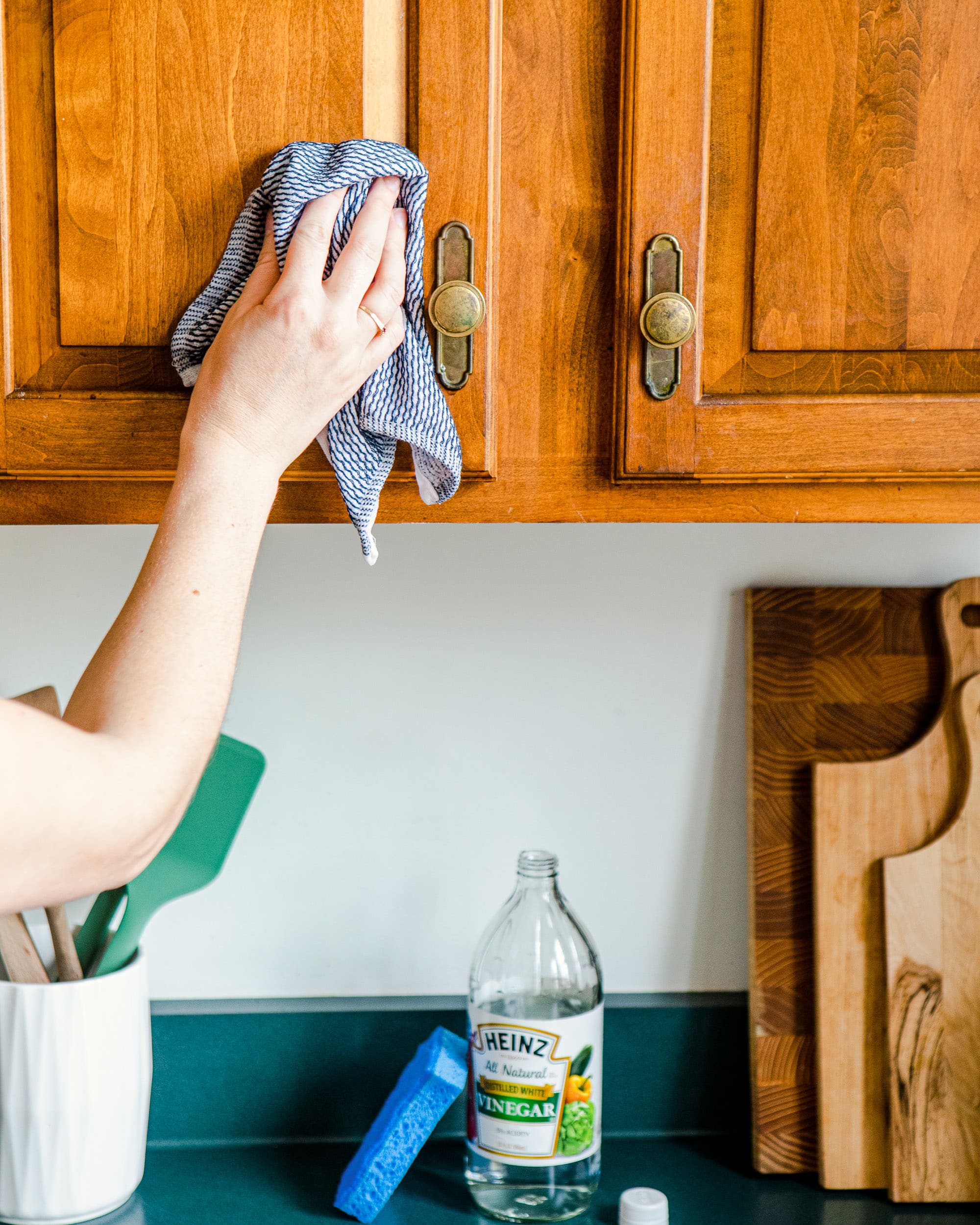
What you need before you start
Gathering the right tools saves time and prevents damage. Below are the items I use most often when I clean my kitchen cabinets.
- Microfiber cloths for gentle wiping and drying.
- Soft sponges and non-abrasive scrub pads for spots.
- Bucket, warm water, and mild dish soap.
- White vinegar or diluted ammonia for tough grease.
- Baking soda for deodorizing and gentle scrubbing.
- Olive or mineral oil for rubbing out water marks on wood.
- Screwdriver and small bowl for removing hardware.
- Old toothbrush for hinges and crevices.
- Gloves and protective eyewear if you use stronger cleaners.
Use these supplies whenever you ask how to clean my kitchen cabinets. Having them ready keeps the job smooth.

How to prepare cabinets before cleaning
Preparation matters. A good prep step removes loose dirt and protects surfaces.
- Empty cabinet tops and open doors.
- Remove all dishes and liners.
- Take out hardware if you plan to deep clean handles and knobs.
- Dust with a microfiber cloth to remove crumbs and loose grime.
- Place towels or paper beneath cabinet doors you will work on.
A short prep saves time and prevents spills. Preparation sets the stage for any how to clean my kitchen cabinets method.
Step-by-step: routine cleaning for all finishes
This is the base routine I use weekly in my kitchen and recommend to clients.
- Mix warm water with a few drops of dish soap in a bucket.
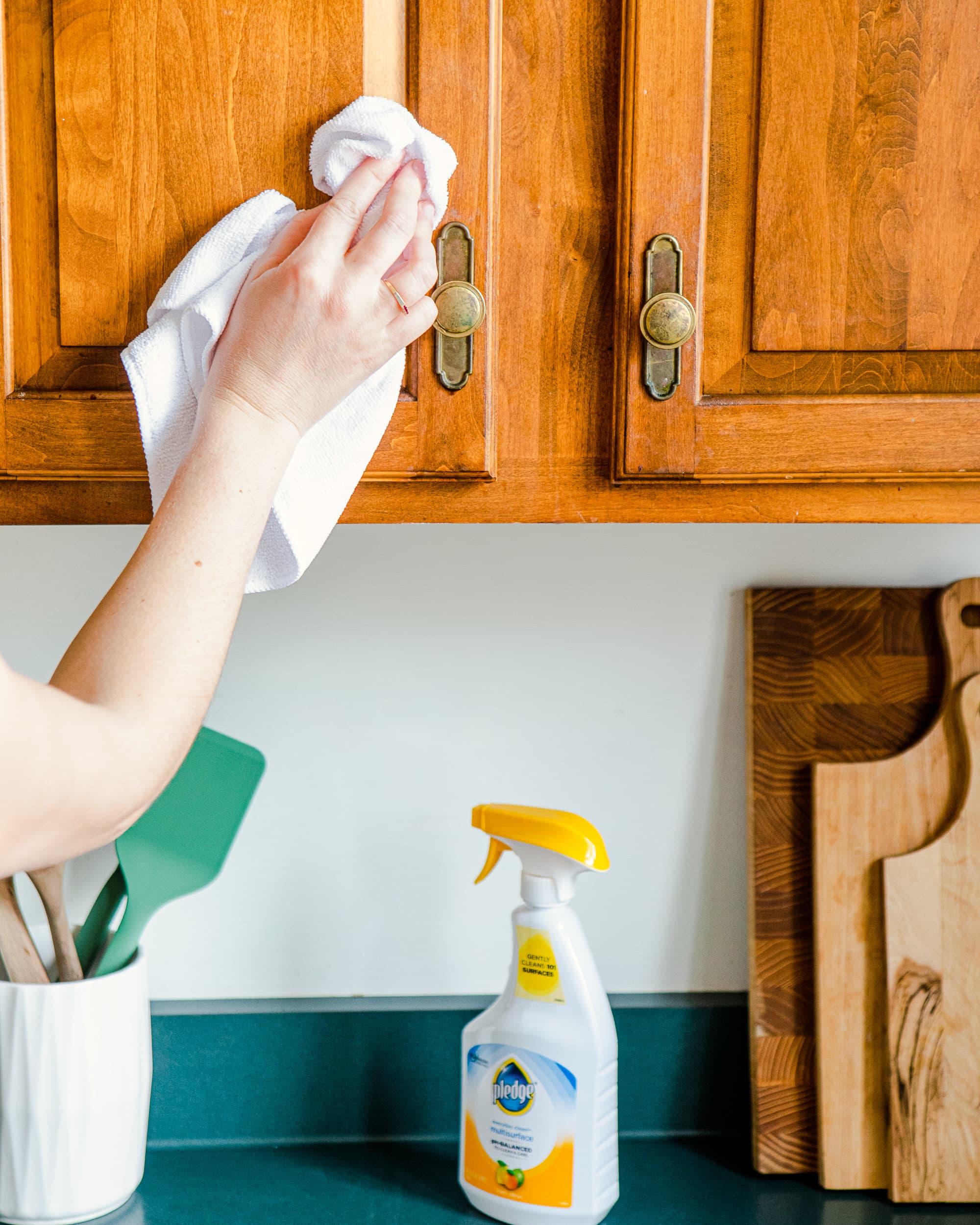
- Dip a microfiber cloth, wring well, and wipe cabinet faces gently.
- Use a second cloth dampened with plain water to rinse soap residue.
- Dry immediately with a clean microfiber cloth to avoid streaks and water damage.
- Wipe hardware and hinges separately with the same mild solution.
This routine works well for most situations and answers the basic how to clean my kitchen cabinets question quickly and safely.
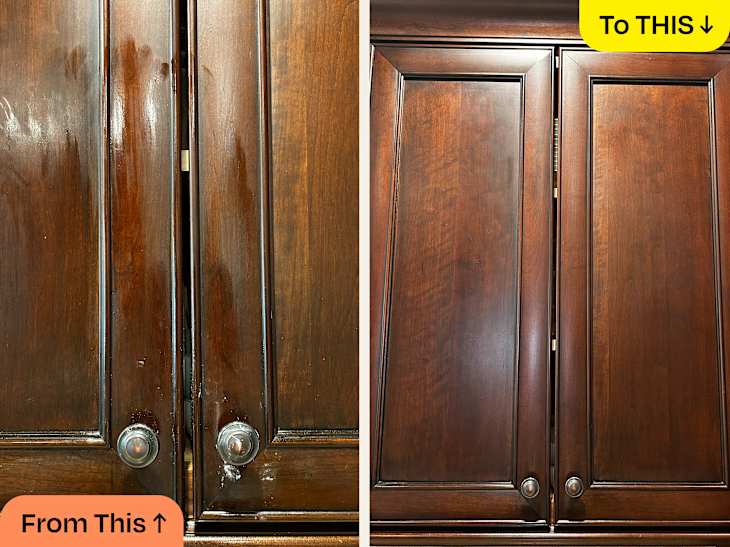
Finish-specific cleaning: painted, wood, laminate, and metal
Different finishes need different care. Follow these finish-specific tips to avoid damage.
- Painted cabinets
- Use mild soap and water. Avoid abrasive pads and strong solvents.
- For scuffs, try a magic eraser lightly. Test in an inconspicuous spot first.
- Stained or natural wood
- Use a gentle soap or a wood cleaner. Wipe in the grain direction.
- Avoid excess water. Dry immediately and use a wood conditioner occasionally.
- Laminate or thermofoil
- Clean with mild soap and warm water. Avoid scrubbing edges aggressively.
- For stubborn grease, use a 1:1 vinegar and water mix and rinse well.
- Metal or stainless steel
- Use a soft cloth and mild detergent. Wipe with the grain.
- For fingerprints, a small amount of vinegar or commercial stainless cleaner helps.
Knowing how to clean my kitchen cabinets by finish prevents costly mistakes and keeps cabinets lasting longer.

Removing grease and tough stains
Grease is the common enemy. Here are tested solutions that work.
- Warm water and dish soap: soak a cloth and let it sit briefly, then wipe.
- Vinegar solution: mix equal parts water and white vinegar for light grease.
- Ammonia solution: dilute one tablespoon of household ammonia in a cup of water for heavy buildup. Use gloves and ventilate the room.
- Baking soda paste: mix baking soda and water for gentle scrubbing on stubborn spots.
- Commercial degreasers: use sparingly and test a hidden spot first.
Always rinse and dry after using stronger solutions. These steps are core to how to clean my kitchen cabinets when grease builds up.
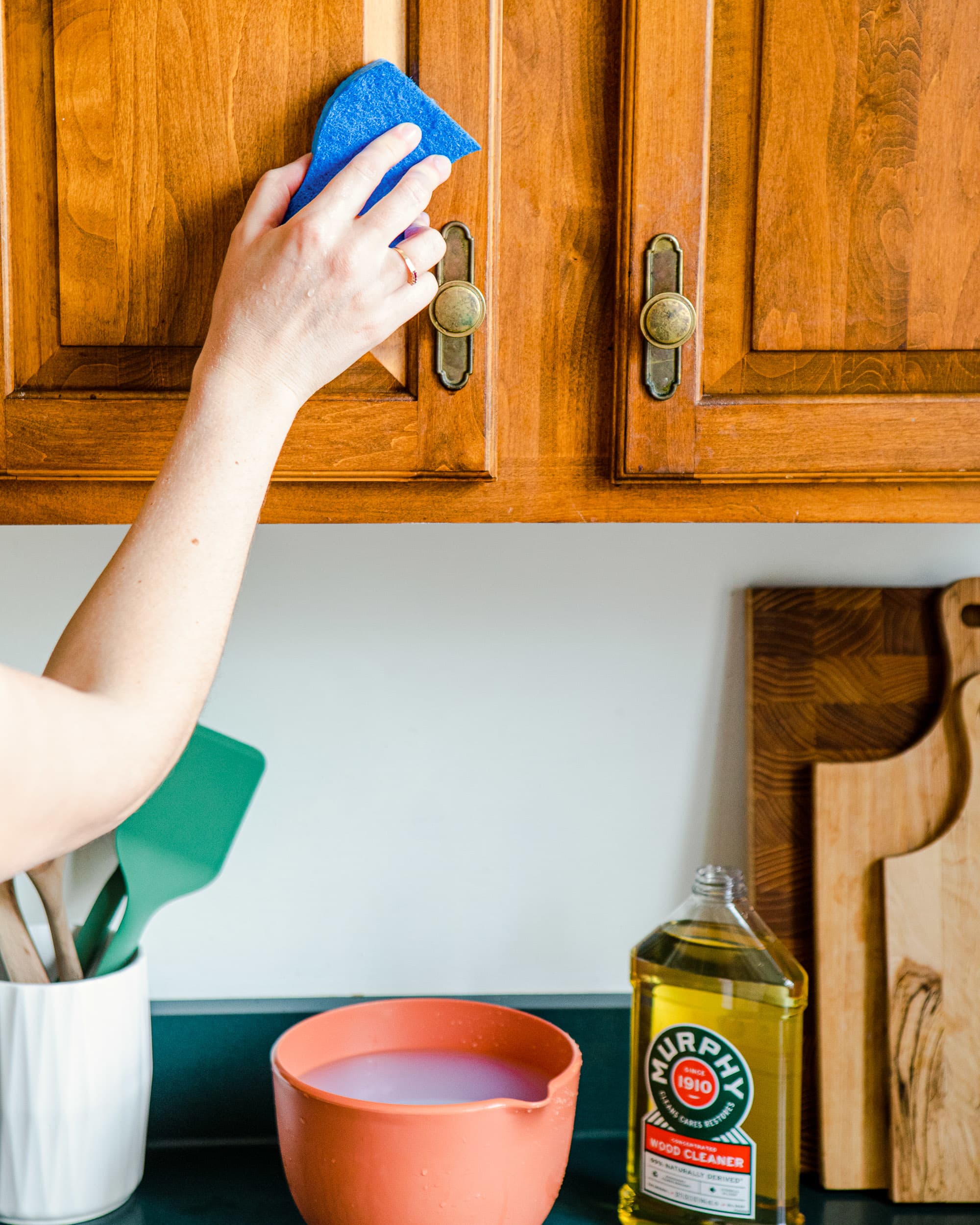
Hardware, hinges, and interiors
Don’t forget the unseen parts. They can carry the most grime.
- Remove knobs and pulls with a screwdriver. Soak in warm, soapy water.
- Clean hinges with toothbrush and mild cleaner. Re-lubricate hinges if squeaky.
- Vacuum interiors to remove crumbs before wiping.
- Wipe shelving inside with a mild detergent and dry fully before returning items.
- Replace or add liners to protect shelves and reduce future cleaning.
Addressing hardware and interiors completes the how to clean my kitchen cabinets process.

Deep cleaning and stain removal
For long-neglected cabinets or sticky spills, try this deeper approach.
- Work in small sections. Remove doors if necessary to clean edges and backs.
- Use a gentle degreaser or diluted ammonia for heavy buildup. Ventilate the room.
- For ink, marker, or colored stains, test a small area with rubbing alcohol or baking soda paste.
- For water rings on wood, rub a small amount of mineral oil or use a wood-specific cleaner.
- Sand and refinish only if the finish is beyond cleaning. This restores cabinets but is a larger project.
Deep cleaning answers the tougher side of how to clean my kitchen cabinets and can refresh neglected spaces.
Preventive care and regular maintenance
Prevention reduces the need for heavy cleaning. These habits help.
- Wipe spills as they happen to avoid stains and sticky spots.
- Clean cabinets once a week using the mild soap method.
- Use cabinet liners to protect shelving.
- Avoid direct heat and prolonged moisture near cabinet faces.
- Refinish or touch up paint and stain every few years to maintain protection.
A small effort each week changes how often you must deep clean. This habit makes how to clean my kitchen cabinets an easy routine.

Eco-friendly cleaning options
If you prefer green cleaners, these are effective and safe.
- Warm water and castile soap for routine washes.
- White vinegar and water for grease and odor control.
- Baking soda for scrubbing and stain lifting.
- Lemon juice to brighten and remove mild stains.
- Microfiber cloths reduce the need for chemicals.
Eco options answer how to clean my kitchen cabinets without harsh fumes. They are safe for families and pets.
Common mistakes to avoid
Avoid these errors that can harm your cabinets.
- Using abrasive pads that scratch surfaces.
- Letting water sit on wood finishes.
- Applying full-strength solvents without testing.
- Ignoring hardware buildup and hinge maintenance.
- Over-cleaning with oil-based products that attract dirt.
Knowing what not to do is as important as knowing how to clean my kitchen cabinets correctly.
My personal tips and lessons learned
From years of cleaning, these tips saved time and preserved cabinets.
- Test cleaners on a hidden spot first. I once ruined a painted door by skipping a test.
- Use two cloths: one for washing and one for rinsing. This avoids soap residue.
- Keep a small cleaning kit under the sink for weekly touch-ups.
- Label cleaners for wood or paint to prevent accidental damage.
- If unsure, start with the gentlest method and move to stronger options.
These small habits reflect real experience in how to clean my kitchen cabinets effectively and safely.
Frequently Asked Questions of how to clean my kitchen cabinets
How often should I clean my kitchen cabinets?
Clean cabinet exteriors weekly with a mild soap solution. Deep clean or degrease every few months or as needed.
Can I use vinegar on painted cabinets?
Yes, dilute vinegar with water for light cleaning. Test a hidden area first to ensure no finish reaction.
How do I remove sticky residue from cabinet doors?
Use a baking soda paste or a little rubbing alcohol applied with a soft cloth. Rinse and dry the surface afterward.
Is it safe to remove cabinet doors for cleaning?
Yes, removing doors lets you clean edges and backs more thoroughly. Keep screws and hinges labeled for easy reassembly.
What’s the best way to clean kitchen cabinet hardware?
Soak metal hardware in warm, soapy water, scrub with a toothbrush, dry thoroughly, and polish if needed.
Conclusion
You now have a clear, practical guide on how to clean my kitchen cabinets for every finish. Start with mild soap and water, adapt methods by finish, and add preventive steps to reduce future work. Small weekly efforts prevent big jobs later and keep your kitchen fresh and functional. Try these tips this week, subscribe for more home care guides, or leave a comment with your cabinet-cleaning questions.