
Polish cabinets safely and restore shine by cleaning, buffing, and using the right polish or wax.
I have spent years restoring and maintaining kitchen finishes, so this guide on how to polish kitchen cabinets draws on practical experience and proven techniques. You will find step-by-step instructions for wood, painted, and laminate surfaces, a full tool list, common mistakes to avoid, and realistic maintenance advice. Read on to learn how to polish kitchen cabinets the right way, protect your investment, and keep your kitchen looking fresh for years.

Why polishing matters for kitchen cabinets
Polishing protects surfaces, restores shine, and repels grease and grime. Regular polishing also extends the life of finishes and makes cleaning easier.
Polishing is different from refinishing: polishing enhances an existing finish without stripping or sanding. Knowing how to polish kitchen cabinets helps you maintain value and appearance with minimal time and cost.
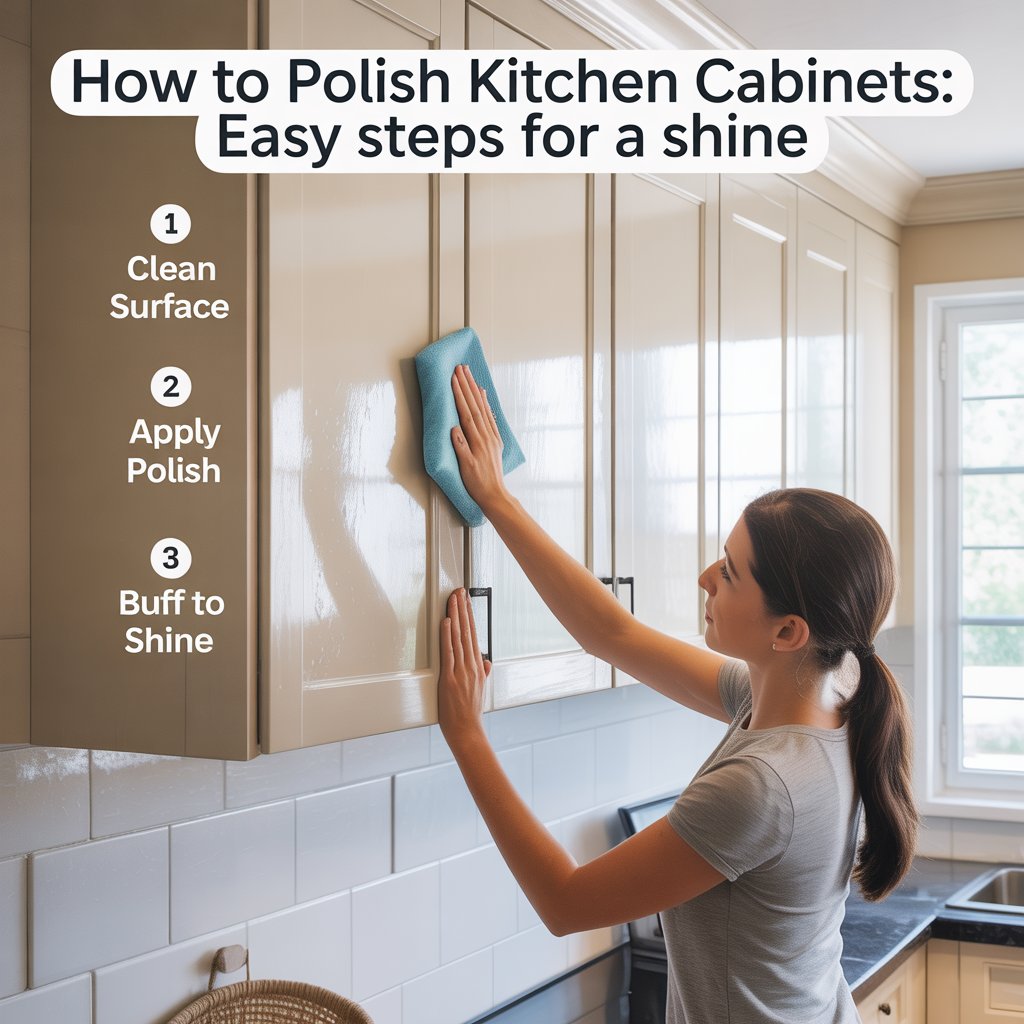
Tools and materials you need
Prepare the right tools and materials before you start. Good preparation makes the task faster and prevents damage.
- Microfiber cloths: soft, lint-free, and ideal for buffing.
- Mild dish soap: for initial cleaning without harming finishes.
- White vinegar: dilute to cut grease safely on many surfaces.
- Commercial cabinet polish or paste wax: choose product matched to wood, painted, or laminate cabinets.
- Mineral spirits: for tough grease on oil-finished wood (use sparingly).
- Soft-bristle brush or old toothbrush: for corners and grooves.
- Fine steel wool (0000) or fine-grit sanding pad: only for denatured finishes and when manufacturer allows.
- Gloves and eye protection: for safety with cleaners and solvents.
- Drop cloths and painter’s tape: to protect countertops and hardware.
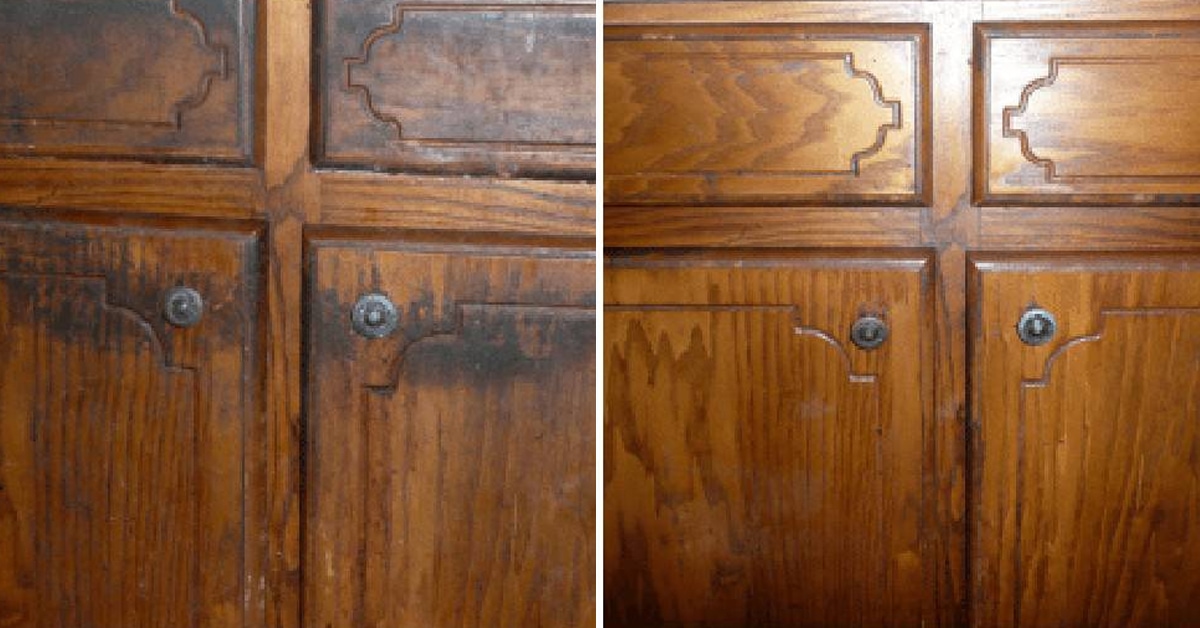
Step-by-step: how to polish kitchen cabinets (wood/varnished)
Follow these clear steps for varnished, sealed wood cabinets. Read all steps before you begin.
- Clear the area
- Remove items from countertops and open cabinet doors and drawers for ventilation.
- Remove or protect hardware
- Remove knobs and pulls if you prefer a full-access polish. If not, cover hardware with painter’s tape.
- Clean the surface
- Mix a few drops of mild dish soap in warm water. Wipe cabinets with a damp microfiber cloth to remove grease and dust. Rinse with a clean damp cloth.
- Tackle stubborn grime
- For grease: use a 1:1 mix of white vinegar and water, or a degreaser recommended by the cabinet maker. Test in an inconspicuous spot first.
- Dry thoroughly
- Use a dry microfiber cloth to remove all moisture. Polishing over damp wood can trap moisture and harm the finish.
- Choose the right polish
- Use a liquid polish for quick shine or a paste wax for deeper protection. For lacquer or polyurethane finishes, choose a compatible product.
- Apply polish
- Work in small sections. Apply a thin layer of polish with a clean microfiber cloth. For paste wax, apply in a circular motion and allow to haze per instructions.
- Buff to shine
- Use a fresh, dry microfiber cloth. Buff in the direction of the wood grain with light, even pressure until the surface looks uniform.
- Reattach hardware and inspect
- Replace knobs and pulls. Check for streaks or missed spots and re-buff if needed.
how to polish kitchen cabinets properly means patience and gentle technique. Avoid over-polishing; thin, regular applications work best.
How to polish kitchen cabinets that are painted or laminate
Painted and laminate cabinets need gentler care. Abrasive cleaners, harsh solvents, or waxes made for wood can damage finishes.
- Clean first
- Wipe with mild soapy water and rinse. For stubborn stains, use a diluted vinegar solution.
- Choose the right product
- For painted cabinets, use a non-abrasive polish made for painted surfaces. For laminate, use a cleaner designed for laminates and a liquid polish for cosmetic shine.
- Apply and buff
- Apply sparingly and buff with a microfiber cloth. Avoid products that leave a heavy residue; they attract dirt.
- Touch-up paint
- Small chips on painted cabinets can be touched up with matching paint before polishing to improve the final look.
When learning how to polish kitchen cabinets with modern finishes, always consult manufacturer care instructions to avoid voiding warranties.

Common mistakes and lessons from experience
I have polished many kitchens and seen the same mistakes repeat. Avoid these pitfalls to save time and money.
- Using the wrong product
- A common error is applying paste wax meant for wood to painted or laminate surfaces. Test before you apply widely.
- Over-scrubbing
- Aggressive scrubbing can remove finish. Use soft cloths and go slow.
- Ignoring hardware and hinges
- Grease around hinges draws attention after polishing. Clean hinges and lubricate if needed.
- Skipping a test patch
- Always test cleaners and polishes in an inconspicuous spot. This prevents color loss or finish damage.
- Too frequent polishing
- Over-polishing can build residue. Aim for light polishing every 3–6 months depending on use.
From my experience, the biggest lesson is to use minimal product and more elbow grease in buffing. That gives a natural shine without buildup.
Maintenance schedule and protective tips
A simple routine keeps cabinets looking great. Consistency beats heavy treatments.
- Weekly
- Wipe spills immediately and dust with a microfiber cloth.
- Monthly
- Clean with mild soap and water and inspect for spots.
- Every 3–6 months
- Lightly polish wood cabinets or use a suitable liquid polish for painted or laminate cabinets.
- Annually
- Deep clean, inspect for wear, and touch up paint or replace hardware if needed.
Protective tips:
- Use venting or a range hood to reduce grease buildup.
- Avoid placing hot items directly on or near cabinet faces.
- Use silicone or felt pads behind hardware to prevent scratches.
how to polish kitchen cabinets includes following a simple schedule. This keeps maintenance manageable and effective.
Troubleshooting common issues
If you see streaks, haze, or sticky residue after polishing, try these fixes.
- Haze or sticky finish
- Wipe with a clean, slightly damp cloth and then dry. If residue remains, remove with a small amount of mineral spirits on a cloth, then re-polish properly.
- Uneven shine
- Buff lightly in the direction of the grain. For lacquered surfaces, use a polishing cloth designed for that finish.
- Darkened wood
- If cleaners darken the wood, stop and test with water only. Some oils and cleaners react with certain finishes.
- Scratches
- Small surface scratches on sealed wood can often be minimized with a paste wax or a scratch repair product made for cabinets.
Knowing how to polish kitchen cabinets helps with prevention. Most problems come from incompatible products or skipping tests.
Frequently Asked Questions of how to polish kitchen cabinets
What is the best product to polish wooden cabinets?
For sealed wood cabinets, use a polish or paste wax made for polyurethane or lacquer finishes. Choose a non-silicone product if you plan to repaint or refinish later.
Can I use olive oil or homemade mixtures on cabinets?
Natural oils can give temporary shine but attract dust and become sticky over time. Professional polishes are formulated to protect without residue.
How often should I polish kitchen cabinets?
Light polishing every 3–6 months is ideal for most kitchens. High-use or greasy kitchens may need attention every 1–3 months.
Will polishing remove scratches or dents?
Polishing can minimize the appearance of light surface scratches but will not repair deep dents. Touch-up kits or refinishing are needed for deeper damage.
Is it safe to use vinegar on all cabinet finishes?
Vinegar diluted with water works for many surfaces but may dull some polyurethane or specialty finishes. Always test in an inconspicuous area first.
How do I polish around hinges and inside cabinet doors?
Clean inside areas with mild soap and water. Use a soft brush for corners. Apply polish sparingly near hinges to avoid buildup that impedes movement.
Conclusion
Polishing your cabinets is a practical and cost-effective way to refresh your kitchen. With the right tools, a simple routine, and awareness of finish types, you can keep surfaces clean and radiant. Start by testing products, clean gently, and polish in thin layers for the best results. Try one cabinet section this weekend to see the difference, and consider subscribing or leaving a comment to share your results or questions.