
There are about a dozen main types of knives in the kitchen. Find out how many types of knife in kitchen. Simple guide for home cooks to choose the best knife for every task. A well-equipped kitchen is always ready for whatever culinary adventure awaits, and knowing the types of knives available can make all the difference. Each knife serves a unique purpose, and understanding them can elevate your cooking skills.
In this guide, we’ll explore the essential knives every kitchen should have, highlighting their uses and advantages. Whether you’re a budding chef or a home cook, having the right tools can turn ordinary meals into extraordinary culinary experiences.
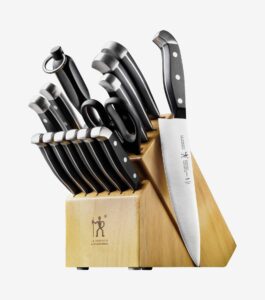
Types of Kitchen Knives
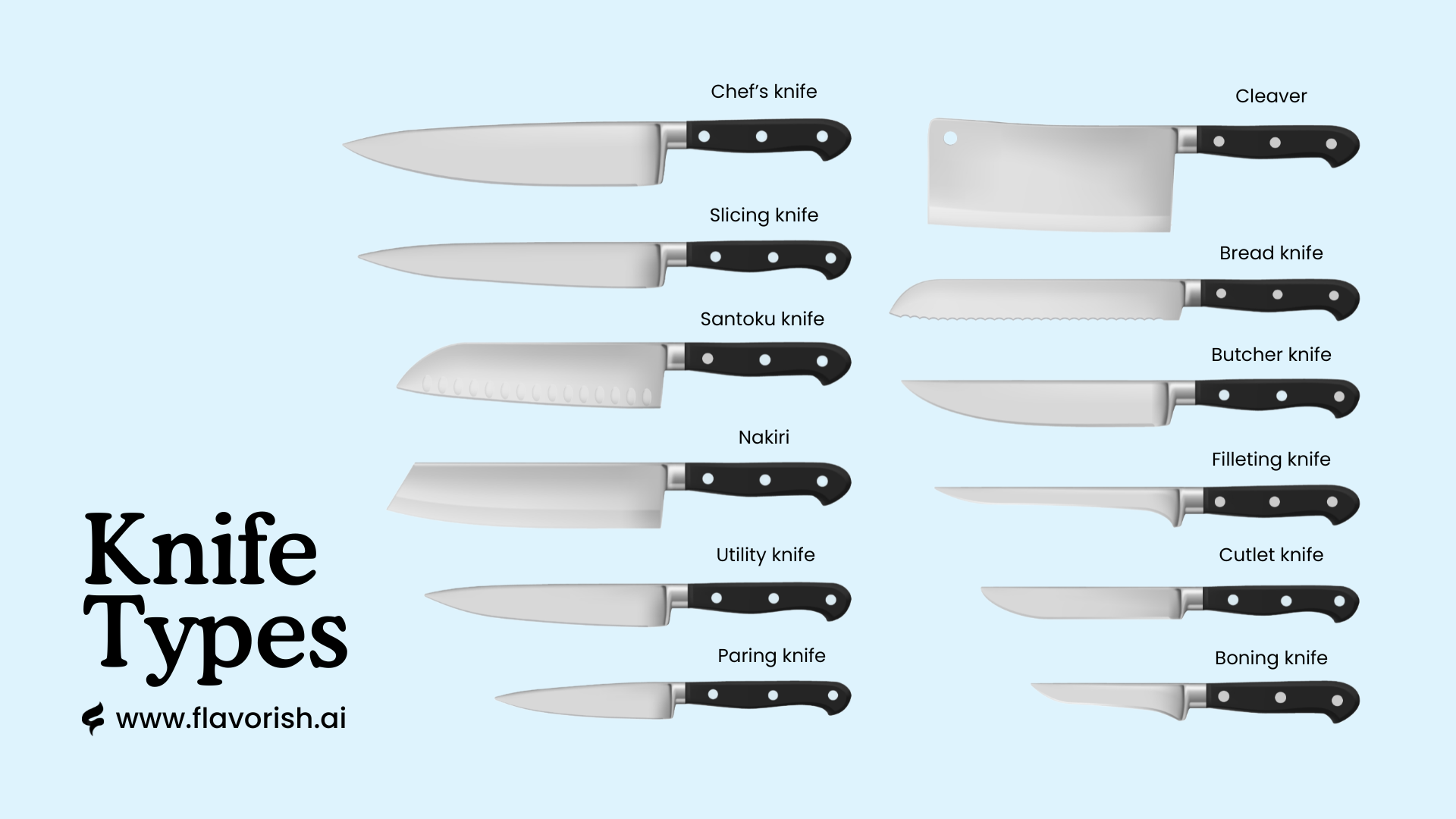
Chef’s Knife
The chef’s knife is a versatile tool, often considered the workhorse of the kitchen. With a broad blade and a slight curve, it allows for efficient chopping, slicing, and dicing. Its balanced design makes it easy to handle for cutting vegetables and meats.
Paring Knife
Paring knives are small but mighty. They excel at tasks requiring precision, like peeling fruits or deveining shrimp. With their short, sharp blades, paring knives offer control for intricate work.
Bread Knife
Featuring a long, serrated edge, bread knives are perfect for slicing through crusty loaves without crushing the delicate interior. They are equally effective for cutting cakes or other soft items without applying pressure.
Santoku Knife
The Santoku is a Japanese staple, known for its ability to handle tasks similar to a chef’s knife. Its shorter, straighter edge is ideal for precise slices and fine chopping, making it perfect for delicate proteins and vegetables.
Utility Knife
Sitting between the chef’s knife and paring knife in size, the utility knife offers versatility for various kitchen tasks. It is handy for slicing small sandwiches, trimming meat, or cutting mid-sized fruits.
Boning Knife
With a slender, flexible blade, the boning knife is designed for precision. It is indispensable for deboning meat and fish, allowing the user to navigate around bones with ease.
Carving Knife
A carving knife is essential for slicing thin cuts of meat, such as roast, poultry, or ham. Its long, sharp blade can make clean, uniform slices, adding elegance to meal presentations.
Cleaver
Cleavers are known for their heavy-duty performance, capable of cutting through bone and tough meat. Their broad, rectangular blades are also useful for smashing garlic or tenderizing meat.
Nakiri Knife
A popular choice for vegetable preparation, the Nakiri knife has a flat edge that allows for straightforward chopping. Its design promotes fast and efficient slicing without needing a rocking motion.
Fillet Knife
Specially designed for filleting fish, the fillet knife’s thin, flexible blade aids in creating clean, accurate cuts along the bones, minimizing waste and maintaining quality.
Steak Knife
Used mainly at the table for cutting cooked meat, steak knives typically feature a serrated edge to slice through steak cleanly without tearing.
Tomato Knife
The tomato knife has a small, serrated blade perfect for slicing through the tough skin and soft flesh of tomatoes, ensuring clean cuts and preserving shape.
Source: flavorish.ai
Questions for How many types of knife in kitchen
What is the most versatile kitchen knife?
The chef’s knife is generally considered the most versatile due to its size and shape, ideal for most cutting tasks.
How often should I sharpen my kitchen knives?
Knife sharpening depends on use. Typically, regular home usage requires sharpening every few months.
Can I wash my knives in a dishwasher?
It’s best to hand wash knives to prevent damage and maintain their sharpness over time.
Are expensive knives worth the investment?
Quality knives offer precision and durability, making them a valuable investment for serious cooks.
What’s the difference between a Santoku knife and a chef’s knife?
While both are versatile, the Santoku knife is often shorter and designed for precision slicing, especially in Asian cuisine.
Conclusion
Equipping your kitchen with the right knives enhances both your culinary experience and the quality of your dishes. Understanding and investing in these essential tools can transform your cooking, adding efficiency and enjoyment to meal preparation. Explore additional resources to expand your collection and skills. Remember, a well-maintained knife is a chef’s best ally. Join our community for more tips and insights into the art of cooking.