
Grip the handle with three fingers and pinch the blade between thumb and forefinger. New to cooking? Read this quick guide on How To Hold A Kitchen Knife Properly and discover easy grip tips that give better control, smooth cuts, and safer kitchen work. As a chef and long-time instructor, I will show you clear, practical steps for how to hold a kitchen knife properly. This guide blends hands-on experience, safety best practices, and simple drills so you gain confidence and control in the kitchen quickly.

Source: wusthof.com
Why the grip matters
A correct grip is the foundation of safe, precise cutting. Learning how to hold a kitchen knife properly reduces slips and uneven cuts. Good grip saves time and protects your fingers while improving your speed.
A strong grip also helps you use less force. When you know how to hold a kitchen knife properly, you cut with the knife’s weight and geometry instead of your wrist. That lowers fatigue and the chance of injury.

Basic grips explained
There are a few grips you will use most often. Each grip has clear pros and cons for certain tasks. Practice each one to understand their feel and purpose.
Pinch grip
- Place your thumb and the side of your index finger on either side of the blade, just forward of the handle.
- Wrap the remaining three fingers around the handle for support.
This is the most recommended grip for how to hold a kitchen knife properly because it gives balance and control.
Handle grip
- Hold the handle with all fingers wrapped around it, thumb on top or around the side.
- Keep your index finger away from the blade spine.
This grip is stable for heavy chopping and for cooks who prefer a more traditional hold.
Saber grip
- Grip the handle with all fingers, thumb resting on the top of the handle.
- Use this for power cuts when you need force rather than finesse.
The saber grip can be useful but is less precise when learning how to hold a kitchen knife properly.
:max_bytes(150000):strip_icc()/20230821-SEA-HowtoHoldAKnife-AmandaSuarez-00-c9c3058f5f21473f9c20a37699fbce27.jpg)
Step-by-step: How to hold a kitchen knife properly
- Position the knife on a flat surface standing vertically with the blade facing you.
- Place your thumb on one side of the blade and your index finger on the other about 1 inch forward of the handle.
- Wrap your remaining three fingers around the handle for support and balance.
- Keep your wrist straight and your shoulder relaxed.
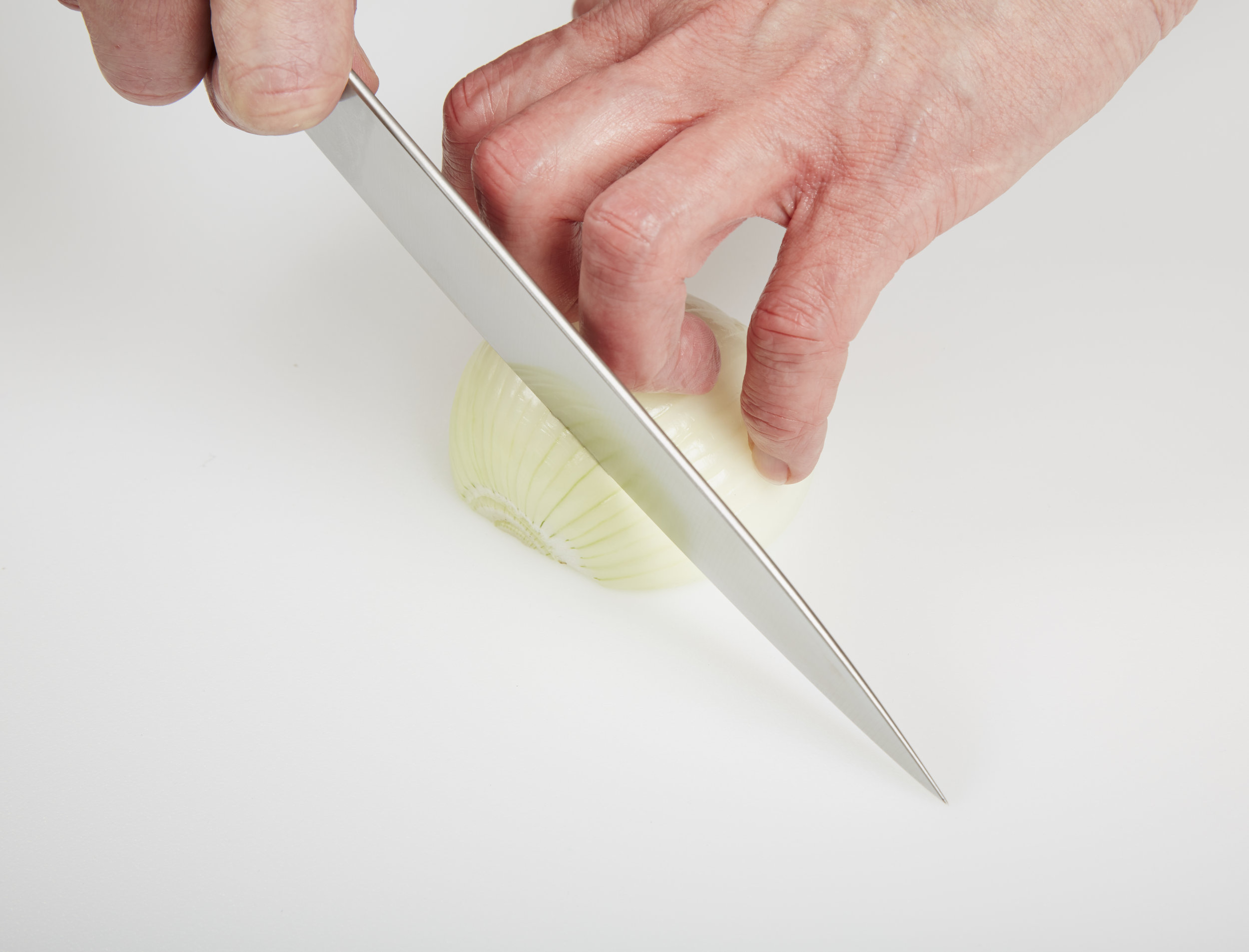
- Use your non-cutting hand to guide the food with a claw grip, with fingertips curled back.
Repeat these steps slowly until the motions feel natural. Focus on how to hold a kitchen knife properly each time you pick up a knife. This repetition builds muscle memory and reduces jerky movements.
I learned this method in my first kitchen. Early on I held the knife too far back on the handle. After switching to the pinch grip, my cuts became cleaner and safer. Trust the process and practice often.

Tips for different tasks and knife types
Different jobs call for small changes in how to hold a kitchen knife properly. For fine slicing use a lighter pinch and a gentle forward-back motion. For heavier chopping open your wrist slightly and use more of the blade’s heel.
For a chef’s knife use the pinch grip for best control. For a paring knife hold it closer to the blade for detail work. For serrated knives use a sawing motion and a secure handle hold rather than a deep pinch.
:max_bytes(150000):strip_icc()/20230821-SEA-HowtoHoldAKnife-AmandaSuarez-01-70ec510c0bdd4e50acaa192e546e63e1.jpg)
Common mistakes and how to fix them
Gripping too far back on the handle reduces control and increases risk. Move your pinch forward and feel the balance point.
Tensing your wrist leads to fatigue and inaccuracy. Relax your grip and keep the wrist aligned with the forearm.
Cutting toward your fingers is dangerous and common among beginners. Use a claw grip with your guide hand to keep fingertips safe.
When you correct these errors you will see quick improvement in how to hold a kitchen knife properly and in your cutting technique overall.
Safety, maintenance, and posture
Always use a sharp knife. A dull blade needs more force and slips more often. Learn basic sharpening or take knives to a professional.
Maintain a stable cutting board and non-slip surface. Keep your work area clear of clutter and wet spots. Wear close-fitting sleeves and remove loose jewelry.
Stand with feet shoulder-width apart and keep weight centered. Good posture supports how to hold a kitchen knife properly and reduces strain on your back and shoulders.

Practice drills to build skill
Practice basic cuts slowly and deliberately. Start with simple tasks like slicing a carrot or apple to focus on grip and motion.
Time short practice sessions daily. Aim for short, focused reps to build how to hold a kitchen knife properly into muscle memory.
Record yourself or ask a friend to watch and give feedback. Small corrections add up quickly.

Frequently Asked Questions of how to hold a kitchen knife properly
What is the safest grip for a kitchen knife?
The pinch grip is widely considered the safest for control and precision. It keeps the blade balanced and reduces wrist strain.
Should my thumb touch the blade?
Your thumb should rest on the flat side of the blade near the handle, not on the sharp edge. This placement helps control and balance.
How tight should I hold the knife?
Hold the knife firmly but not tightly. A relaxed but secure grip keeps your wrist loose and improves accuracy.
Can children learn how to hold a kitchen knife properly?
Yes, with supervision and a small, appropriate blade they can learn safe habits. Start with guided practice and slow tasks.
Does knife shape change how I hold it?
Yes. Wider blades favor a forward pinch for control, while small blades are held closer to the tip for detail work. Adjust your grip to the knife’s size and task.
How often should I practice to improve my grip?
Short daily sessions of 5 to 10 minutes are effective for building muscle memory. Regular practice beats infrequent long sessions.
Conclusion
Mastering how to hold a kitchen knife properly is a small change that makes a big difference. Use the pinch grip, keep your wrist aligned, practice often, and maintain sharp tools for safety and efficiency. Start each meal prep as a practice session, and soon your hands will do the right thing without thinking. Try these steps tonight, and leave a comment about your progress or questions.