
Grip the blade pinch-style with thumb and forefinger, while the handle rests in your other three fingers. Learn How To Hold A Kitchen Knife Properly with easy steps for safe cutting, better control, and smooth slicing. I have trained with professional chefs and taught thousands to handle knives safely. This guide explains how to hold a kitchen knife properly with clear steps, tips, and real-world advice so you build confidence and speed while staying safe. Read on to learn reliable methods, common mistakes, and maintenance habits that matter.

Why the right grip matters
A correct grip lets you cut with more control and less effort. When you know how to hold a kitchen knife properly you reduce slips, protect your fingers, and make cuts more even. Good grip lowers fatigue and helps you use the right motion, whether chopping, slicing, or dicing. I have seen cooks halve their prep time once they learned the proper hold and wrist motion.

The two main grips: pinch grip and handle grip
There are two grips to master when learning how to hold a kitchen knife properly. Use the pinch grip for most tasks. Hold the blade between your thumb and side of your forefinger, and wrap your other three fingers around the handle. Use the handle grip for heavy work or when you need more reach; hold the handle fully in your palm with fingers wrapped around it. Most pros favor the pinch grip because it gives control and balance.
:max_bytes(150000):strip_icc()/20230821-SEA-HowtoHoldAKnife-AmandaSuarez-00-c9c3058f5f21473f9c20a37699fbce27.jpg)
Step-by-step: how to hold a kitchen knife properly
- Stand with feet shoulder-width apart and the cutting board at a comfortable height.
- Place your dominant hand on the knife. Put your thumb on one side of the blade near the bolster. Put your forefinger on the other side of the blade. This is the pinch grip.
- Wrap your middle, ring, and little fingers around the handle. Keep a light but firm hold.
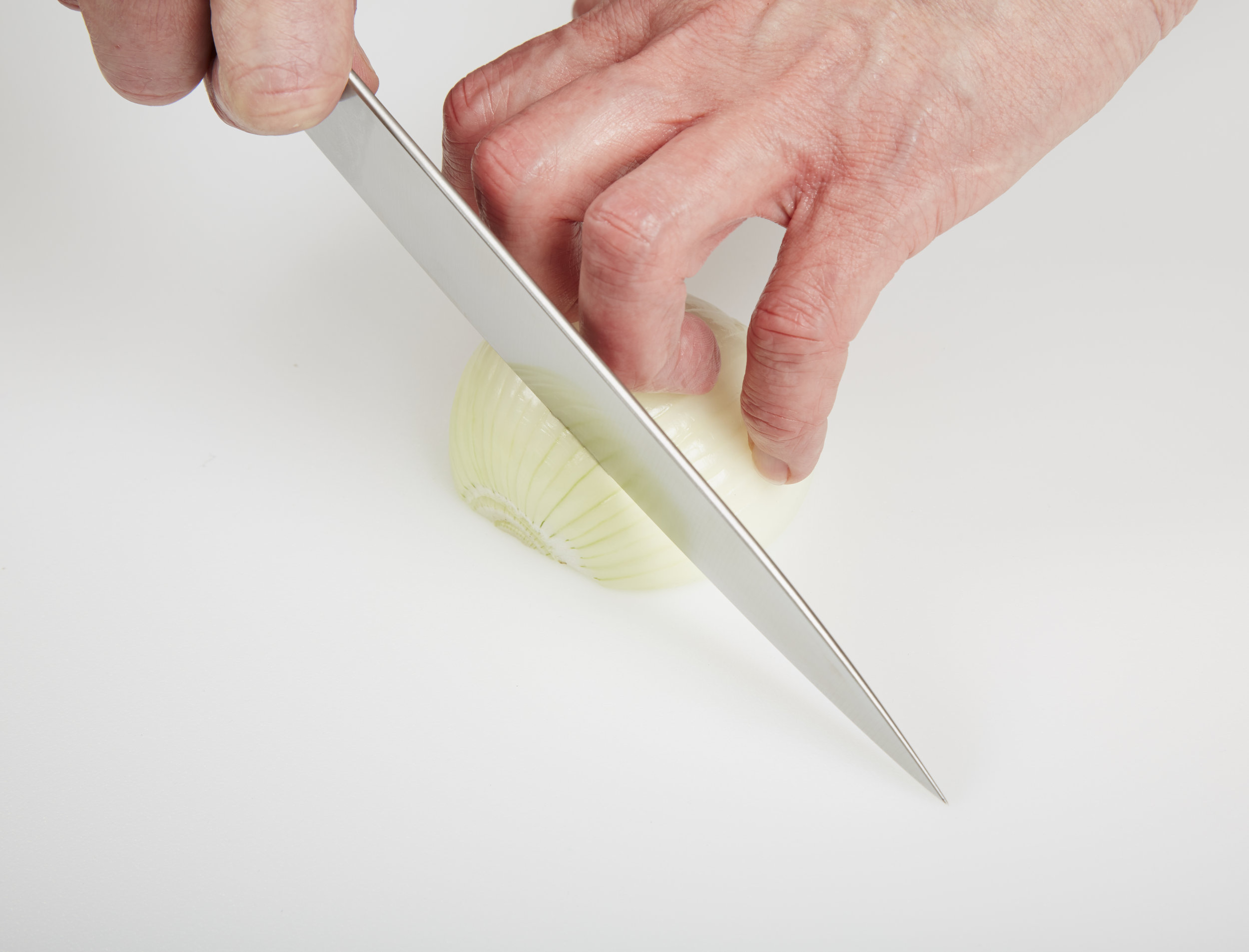
- Hold the food with your other hand using a claw shape: fingertips curled under, knuckles forward. This protects fingers and guides the blade.
- Use your wrist and forearm to move the knife, not just your fingers. Rock the tip for chopping, pull straight back for slicing.
Practicing these steps helps you learn how to hold a kitchen knife properly with muscle memory. When I first taught this to a friend, simple drills with a carrot made a big difference in one session.

Hand, wrist, and body positioning
Your whole body supports the knife. Keep your wrist straight and relaxed. Bend slightly at the knee and shoulder toward the board if needed. Align your forearm so the blade moves in a controlled path. When you focus on how to hold a kitchen knife properly, you will notice less wrist strain and fewer nicks.
:max_bytes(150000):strip_icc()/20230821-SEA-HowtoHoldAKnife-AmandaSuarez-01-70ec510c0bdd4e50acaa192e546e63e1.jpg)
Common mistakes and how to fix them
- Holding the knife too loosely. Fix: increase grip pressure slightly until the knife feels steady without locking your wrist.
- Gripping only the handle with fingers far from the blade. Fix: shift to the pinch grip to improve balance.
- Letting fingertips stick out. Fix: use the claw and tuck fingertips under the knuckles.
- Using the wrist only or arm only. Fix: blend wrist and forearm motion for smooth cuts.
Recognizing and correcting these errors helps you master how to hold a kitchen knife properly faster.
Knife safety and maintenance for better grip
Keep the blade sharp. A dull blade forces you to apply more pressure and increases the chance of slips. Dry and clean the handle so your grip does not slip. Store knives safely in a block or magnetic strip to protect edges and fingers. Practicing how to hold a kitchen knife properly goes hand in hand with good knife care.

Frequently Asked Questions of how to hold a kitchen knife properly
How tight should I hold the knife?
Hold the knife firmly but not with a death grip. A relaxed, steady hold gives control and reduces fatigue.
Is the pinch grip better than the handle grip?
The pinch grip offers more control and balance for most tasks. Use the handle grip for heavy or distant cuts.
Should I use my wrist or arm when cutting?
Use both. Small motions come from the wrist. Larger chops use your forearm. Blend them for smooth work.
How can I practice safely at home?
Practice with soft vegetables like zucchini or carrot. Slow, deliberate motions with the claw hand will build skill and safety.
Does grip change with different knives?
The basics stay the same, but adjust thumb and finger position slightly for very thin or very long blades to maintain balance.
Conclusion
Mastering how to hold a kitchen knife properly brings better control, speed, and safety to your cooking. Start with the pinch grip, use the claw for the other hand, and keep your knife sharp and clean. Practice short sessions and focus on posture to build reliable habits. Try these steps at your next prep session, share your progress in the comments, and subscribe for more practical kitchen skills.