
Clean wood cabinets with mild soap, warm water, soft cloths, and gentle drying. Simple tricks How To Clean Kitchen Wood Cabinets for a clean and shiny kitchen. No strong chemicals needed. I have cleaned and restored many kitchens over the years. This guide on how to clean kitchen wood cabinets is clear, practical, and grounded in real experience. You will learn safe methods for daily cleaning, deep cleaning tips for grease and stains, how to treat different finishes, and easy maintenance habits that protect your cabinets. Read on to get step-by-step instructions and pro tips you can use today.
:max_bytes(150000):strip_icc()/how-to-clean-wood-kitchen-cabinets-0123-2000-641e7e2dcbdc4518a80417c66e2e9194.jpg)
Source: marthastewart.com
Why cleaning wood cabinets matters for kitchen hygiene and longevity
Clean cabinets look better and last longer. Grease, food splatters, and humidity damage wood over time. Regular cleaning preserves finish and prevents buildup that can eat into varnish or paint. Knowing how to clean kitchen wood cabinets stops small problems from becoming costly repairs.
Tools and supplies you need to clean kitchen wood cabinets
Use simple items most people already have. Choose tools and cleaners that protect wood. Below is a short list to prepare before you start.
- Microfiber cloths for gentle wiping and polishing.
- Soft sponge for applying cleaner without scratching.
- Mild dish soap to remove grease safely.
- Warm water for rinsing residue.
- White vinegar for a weak disinfecting solution when safe for the finish.
- Wood cleaner or wood soap for stripped or finished surfaces.
- Mineral oil or furniture polish for conditioning.
- Old toothbrush for corners and hardware.
- Rubber gloves to protect skin during heavy cleaning.
:max_bytes(150000):strip_icc()/SPR-how-to-clean-wood-cabinets-7964253-03-f3fe8f0b0c4f4d4abe94e018e4e87768.jpg)
Source: thespruce.com
Step-by-step: how to clean kitchen wood cabinets
Follow this simple sequence. It works for painted, stained, and sealed wood. Read all steps before starting.
- Remove items from cabinets
- Take items off doors and out of cabinets. This prevents drips and lets you reach edges.
- Dust and dry clean
- Wipe with a dry microfiber cloth. Remove dust, cobwebs, and loose crumbs.
- Make a mild cleaning solution
- Mix a few drops of mild dish soap in a bowl of warm water. For very greasy spots add one teaspoon of baking soda.
- Test a hidden spot
- Try your cleaner on an inside edge. Check for finish damage for 30 seconds.
- Wipe doors and frames
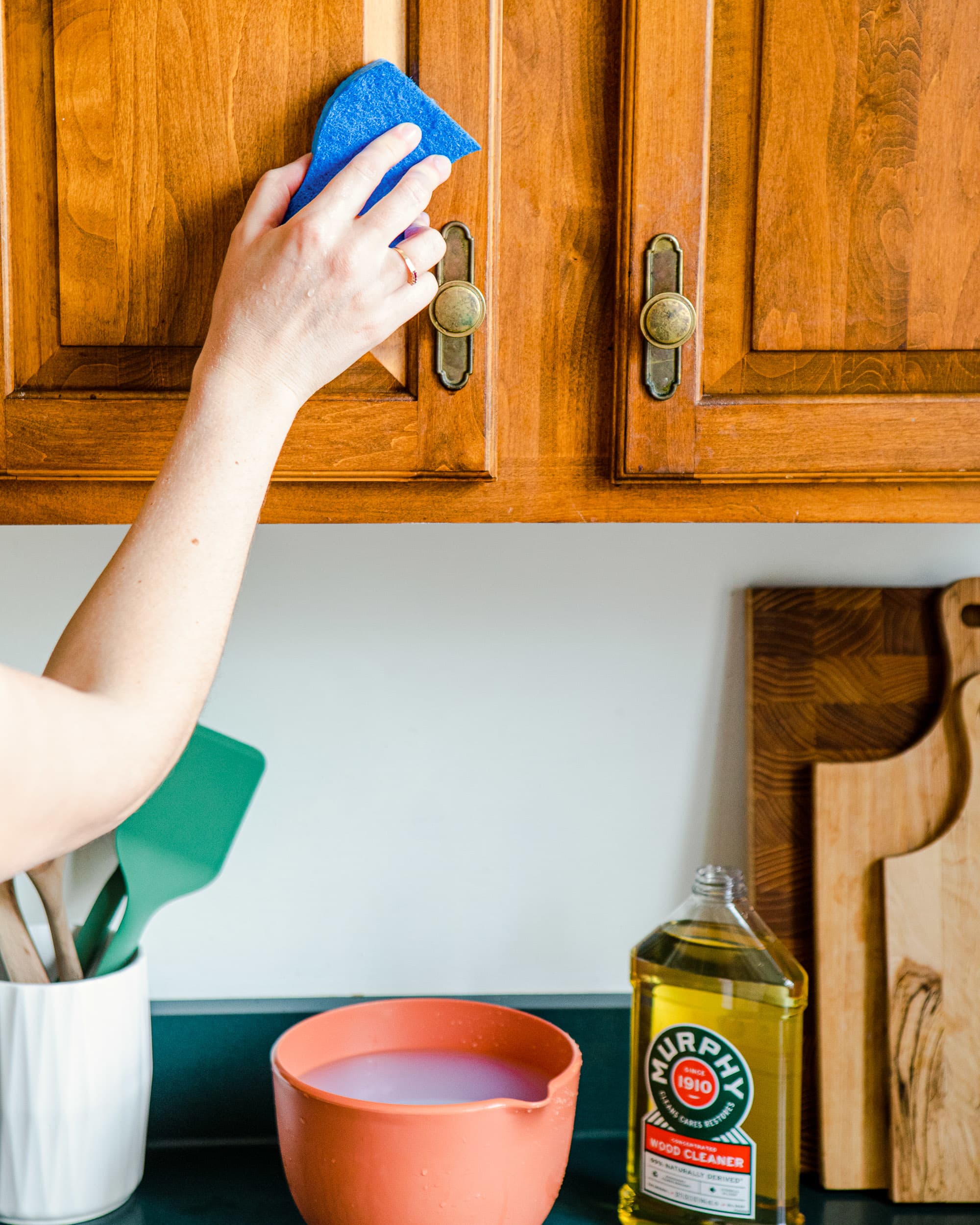
- Dip microfiber in solution, wring well, and wipe along the grain. Rinse cloth often.
- Clean hardware and tight spots
- Use a soft toothbrush for hinges, grooves, and handles. Dry hardware after cleaning.
- Rinse and dry
- Wipe with a second cloth dampened with clean water. Immediately dry with a clean cloth.
- Condition and polish
- If cabinets look dry, apply a small amount of mineral oil or approved polish. Buff lightly.
Repeat these steps monthly or as needed. Proper routine helps you know how to clean kitchen wood cabinets without damage.
Source: everydaycheapskate.com
Deep cleaning and removing stains from wood cabinets
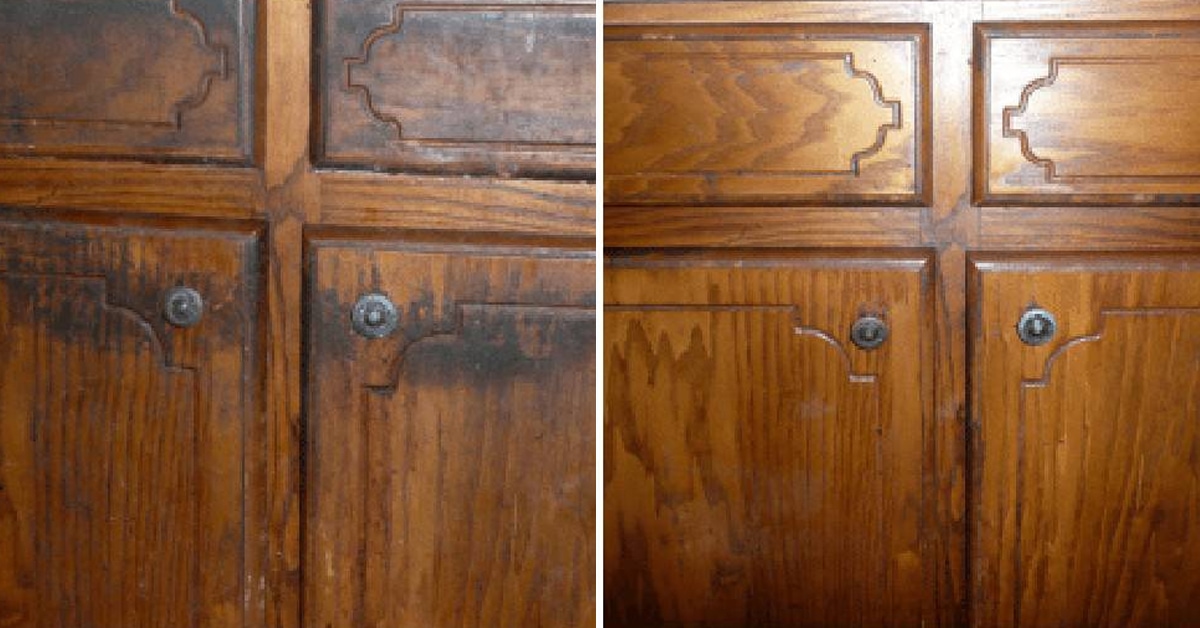
For heavy grease, baked-on spills, or sticky residue you need stronger care. Use gentle methods first. Avoid sanding or harsh solvents on finished wood.
- Grease removal
- Make a mixture of warm water and dish soap. Apply and let sit for a minute. Wipe with a damp cloth. For stubborn grease, mix one part vinegar to three parts water if the finish allows.
- Sticky labels or adhesive
- Rub gently with a cloth and a little vegetable oil. Wipe off oil with mild soap and water.
- Water spots and white rings
- Use a wood-safe polish or a paste of baking soda and water. Rub very gently along the grain.
- Dark stains from moisture
- These often need repair. Light sanding and refinish may be required. Consult a pro if stains go deep.
I once removed a layer of grease from a kitchen in two passes using dish soap and a soft scrub. The finish stayed intact because I tested first and rinsed carefully. This is how to clean kitchen wood cabinets for tough jobs.
Source: thekitchn.com
Cleaning different finishes: painted, stained, and laminated cabinets
Not all cabinets react the same to cleaners. Identify your finish before cleaning.
- Painted cabinets
- Use mild soap and water. Avoid abrasives that can scratch paint. Re-touch chips with matching paint if needed.
- Stained and varnished wood
- Use gentle soap and water or a wood cleaner. Do not use pure vinegar or bleach often; these can dull finish.
- Laminate or thermofoil
- These are durable. Use mild detergent and soft cloths. Avoid heat or strong solvents near edges to prevent separation.
Knowing how to clean kitchen wood cabinets by finish saves you from stripping or dulling surfaces. Test cleaners on an inside edge every time.
:max_bytes(150000):strip_icc()/SPR-how-to-clean-wood-cabinets-7964253-03-f3fe8f0b0c4f4d4abe94e018e4e87768.jpg)
Routine maintenance and prevention to keep cabinets clean
Small habits prevent big problems. A little care each week keeps cabinets bright.
- Wipe spills immediately to stop staining.
- Clean lightly once a week with a damp microfiber cloth.
- Deep clean monthly or when grease builds up.
- Use range hoods and splatter guards while cooking.
- Avoid storing wet items inside cabinets.
- Refinish or polish annually for older wood.
If you follow these habits you will reduce the need for heavy cleaning and learn how to clean kitchen wood cabinets with minimal effort.
Source: thekitchn.com
Common mistakes to avoid when cleaning wood cabinets
Protect your finish by avoiding these missteps.
- Using abrasive scrubbers that scratch the wood.
- Applying undiluted vinegar or bleach to finished surfaces.
- Letting water sit on wood, causing warping or stains.
- Skipping the test spot before trying a new cleaner.
- Overusing polish, which can build a sticky layer.
These errors are common. They taught me to be cautious and to always test first when learning how to clean kitchen wood cabinets.
:max_bytes(150000):strip_icc()/SPR-how-to-clean-wood-cabinets-7964253-02-3c59c87d40ee4bfe80e3e32a65a3d0b9.jpg)
Source: thespruce.com
Frequently Asked Questions of how to clean kitchen wood cabinets
What is the safest cleaner for wood cabinets?
A mild dish soap mixed with warm water is safe for most finished wood cabinets. Test on a hidden spot first to ensure no finish damage.
Can I use vinegar to clean wood cabinets?
A diluted vinegar solution (one part vinegar to three parts water) can help cut grease but may dull some finishes. Always test first and rinse well.
How often should I deep clean my cabinets?
Deep clean every 3 to 6 months for kitchens used daily, and sooner if you notice grease buildup or sticky spots.
Will furniture polish harm my cabinet finish?
Occasional use of a quality polish or mineral oil is fine. Overuse can leave a residue, so use sparingly and buff well.
How do I remove water rings or heat marks?
Light water rings may be reduced with a gentle paste of baking soda and water or a wood-safe polish. Deep damage may need refinishing by a professional.
Conclusion
Cleaning wood cabinets is simple when you use the right steps. Use mild soap, soft cloths, and a test spot to protect finishes. Tackle grease with patience and do small cleanings often. Begin a routine today to preserve your kitchen and prevent costly repairs. Try these steps on one cabinet door first, then work through the kitchen, and share your results or questions below.